

(Touchscreen)

In the summer of 1878, workers began installing 976 pieces of glass into the new Capitol’s iron rotunda floor frame. According to newspaper reports, approximately 50 tiles could be installed in a day. Tradition says that these glass tiles—sometimes called illuminated tiles—were produced in Lancashire, England, by the London and Manchester Plate Glass Company.
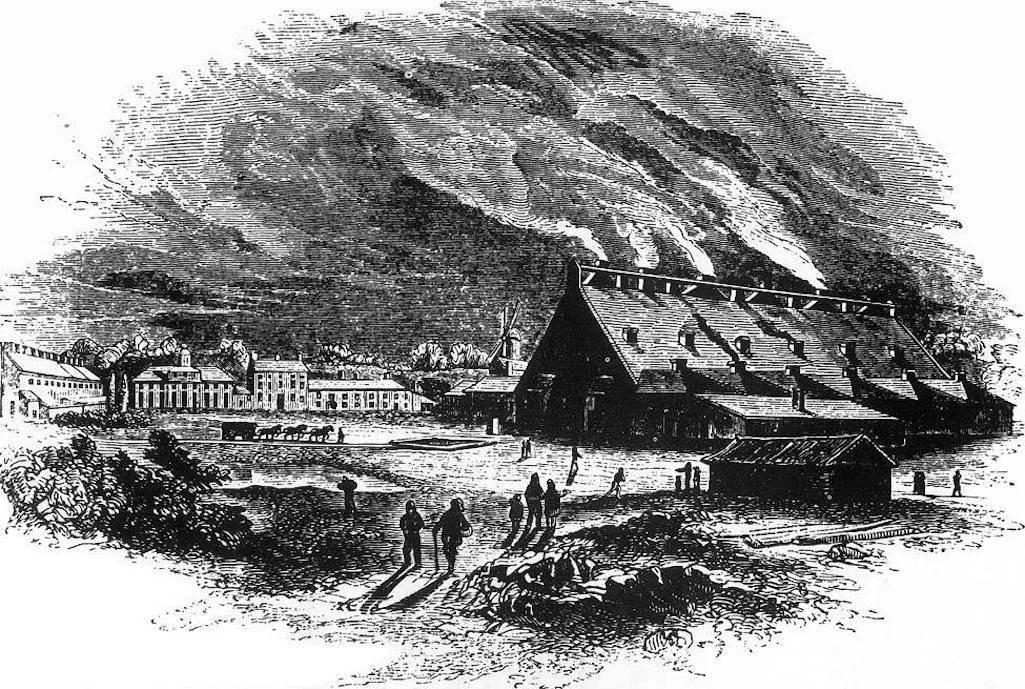
The British Cast Plate Glass Company’s plant in Ravenhead.
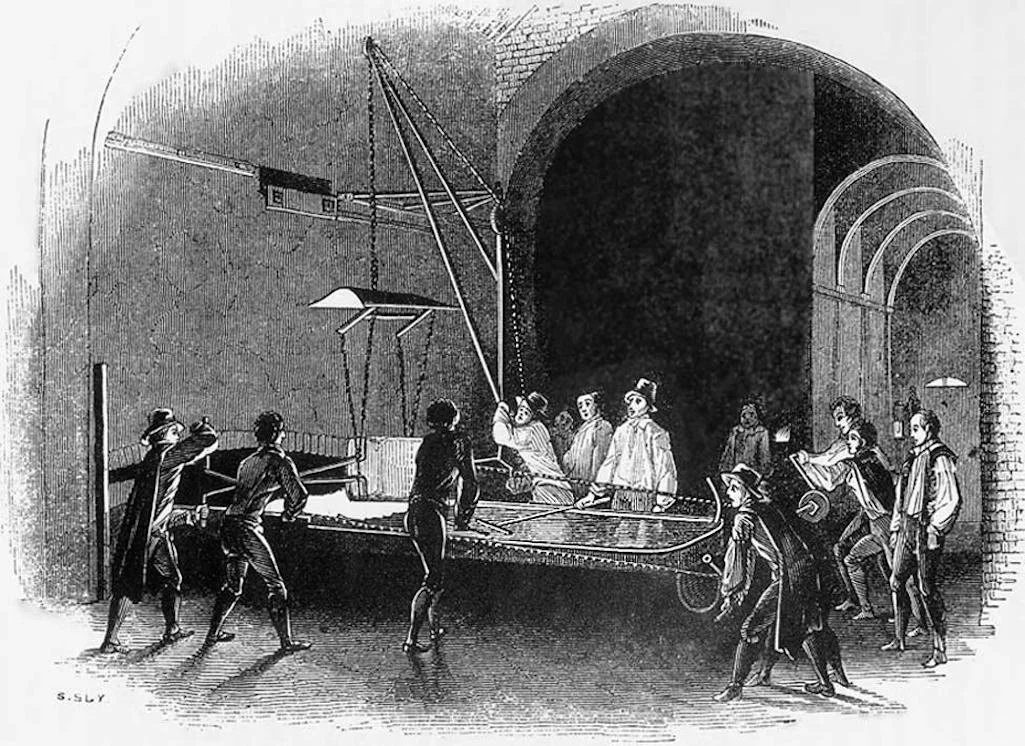
An illustration showing the casting of glass at the British Plate Glass Company in Ravenhead.
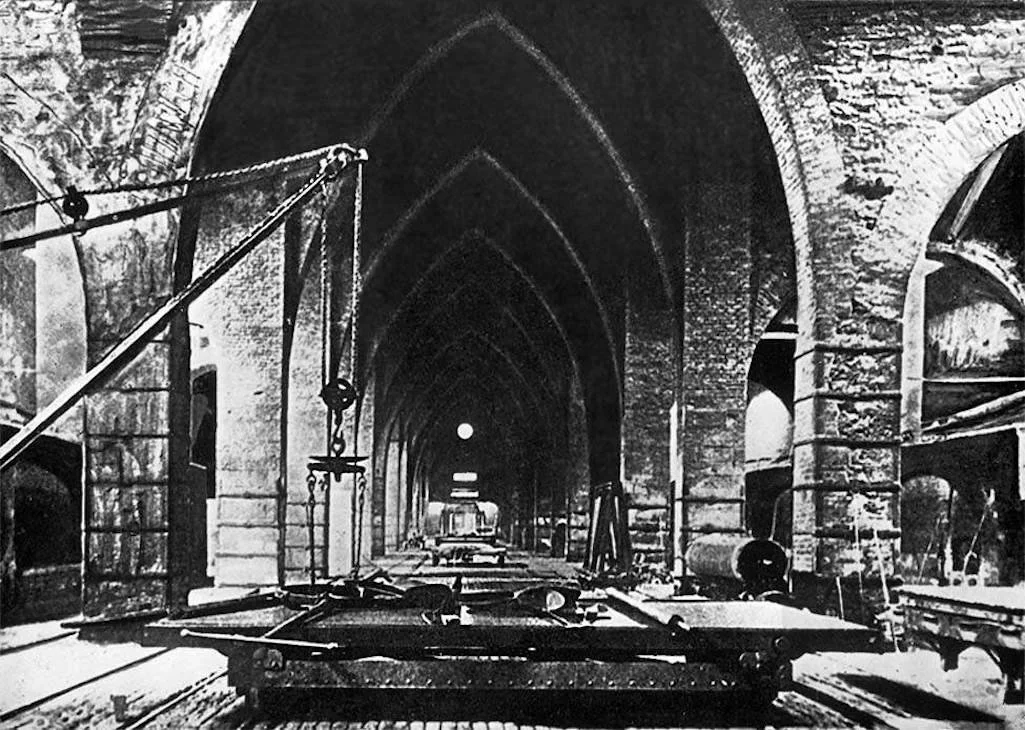
The casting hall of the Ravenhead glass works in Lancashire, England.
(Click on photos to enlarge)


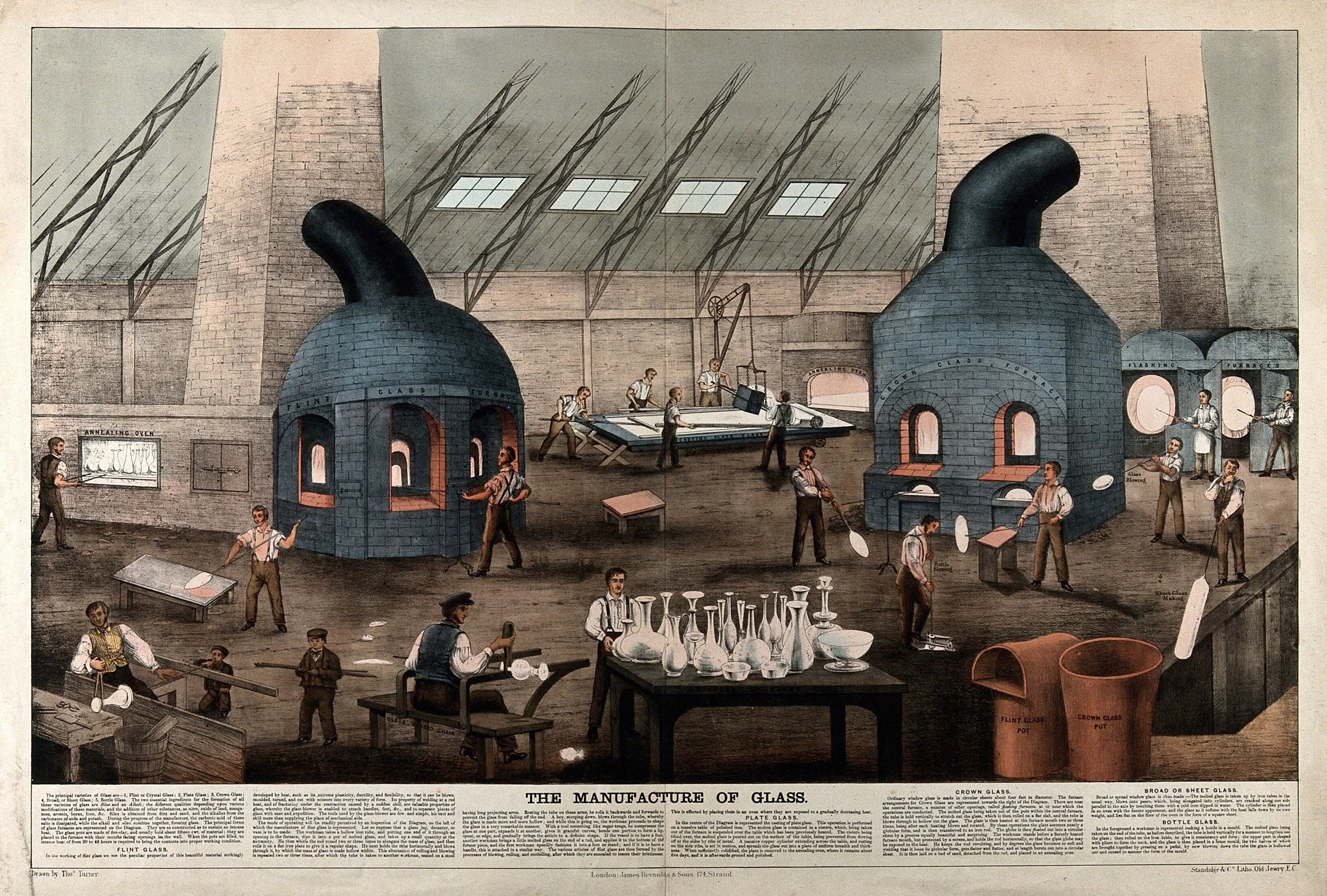
Illustration showing the various methods of 19th century glass making in Lancashire, England.


The British Cast Plate Glass Company’s plant in Ravenhead.
Image courtesy of Stephen Wainwright, Sutton Beauty and Heritage
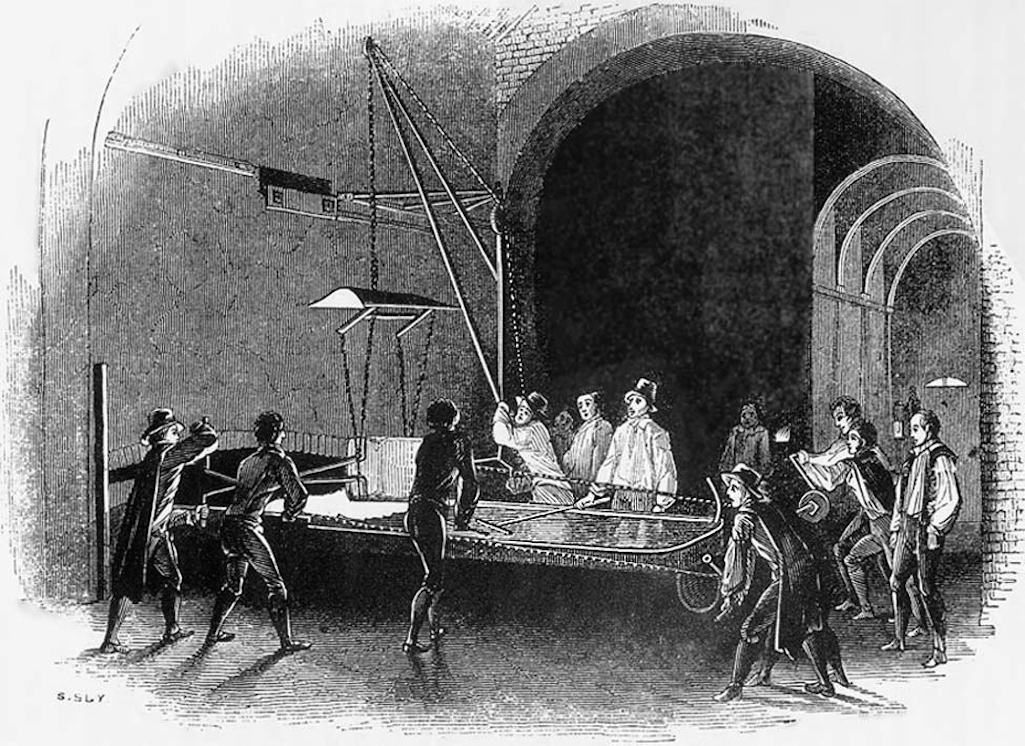
An illustration showing the casting of glass at the British Plate Glass Company in Ravenhead.
Image courtesy of Stephen Wainwright, Sutton Beauty and Heritage
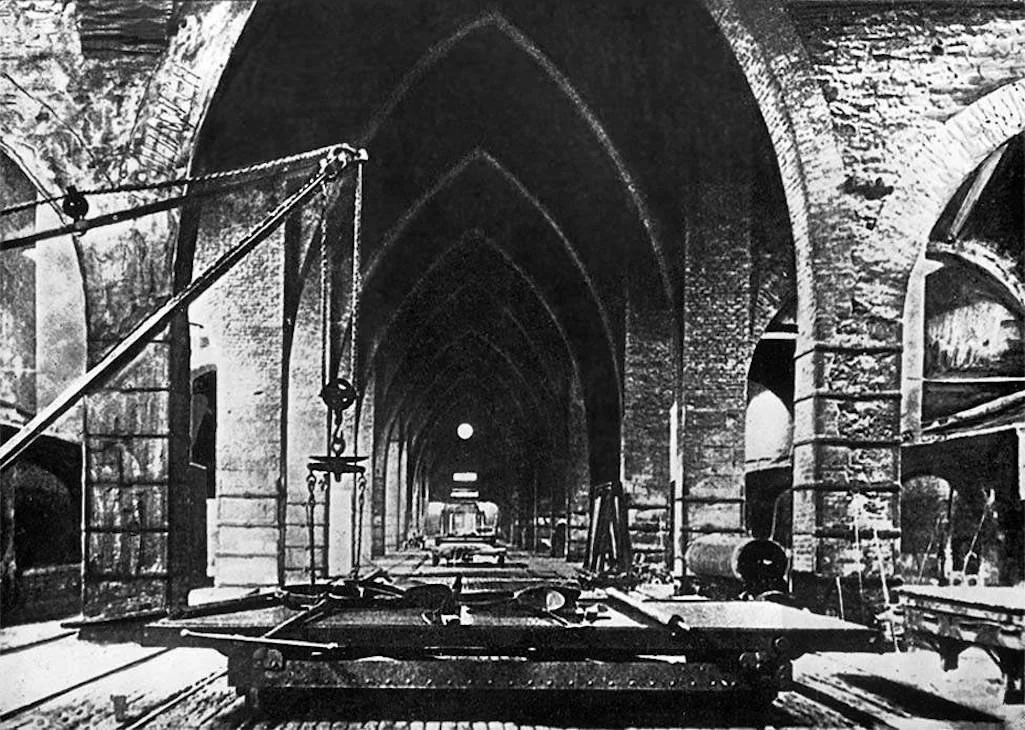
The casting hall of the Ravenhead glass works in Lancashire, England.
Image courtesy of Stephen Wainwright, Sutton Beauty and Heritage
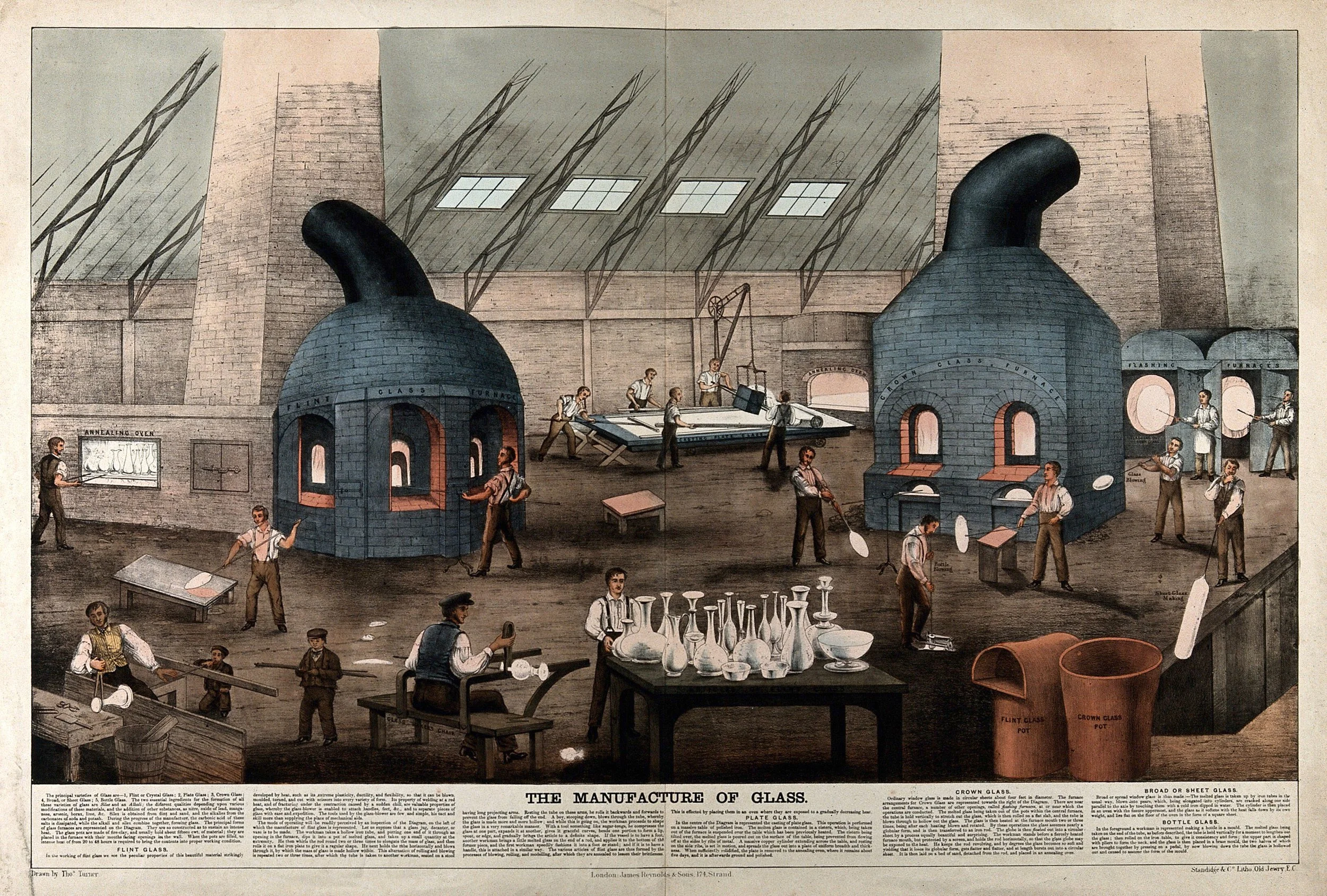
Illustration showing the various methods of 19th century glass making in Lancashire, England.
Image courtesy of The British Plate Glass Factory, St. Helens, Lancashire, Welcome Collection

On January 18, 1931, a fire broke out in the east wing of the ground floor. Determined as “spontaneous combustion” at a cigar stand, the fire spread to the area underneath the glass floor. Well over half of the tiles were cracked and scorched from the heat of the blaze. The broken tiles were replaced with glass that was 3/8” thinner than the original glass. As a result, wooden shims were inserted between the glass and the iron frame.
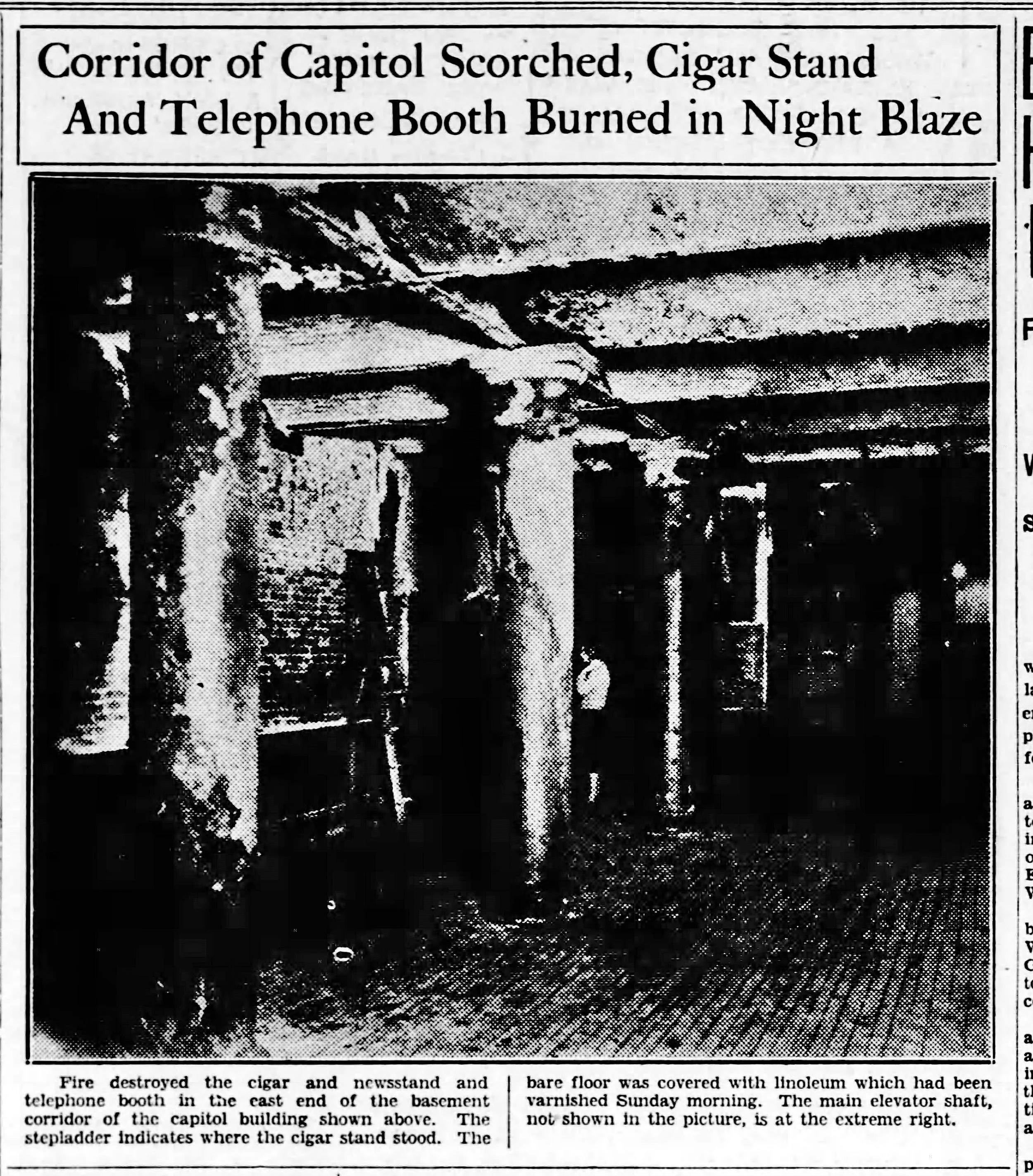
The 1931 fire led to the replacement of a majority of the original glass floor tiles.
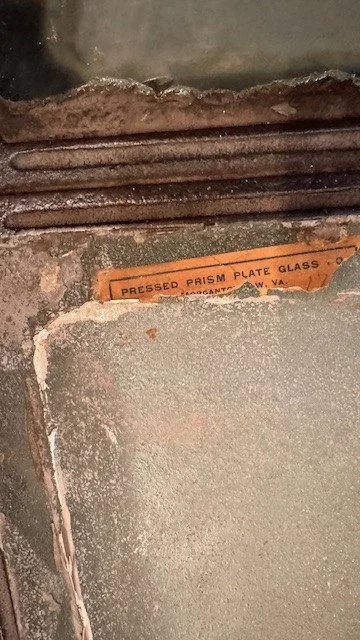
Survey work in 2024 uncovered a label underneath a thought-to-be original tile reading “Pressed Prism Plate Glass Co.”
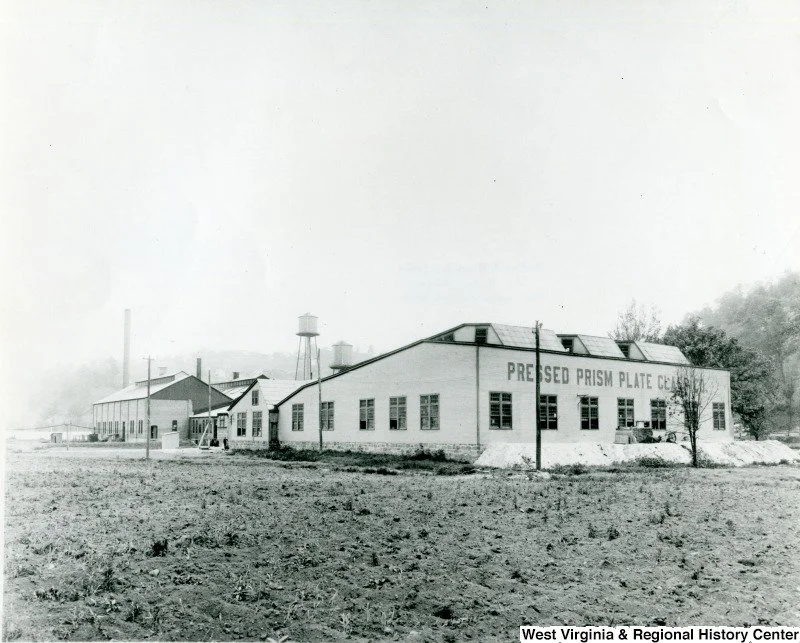
Factory of the Pressed Prism Plate Glass Company near Morgantown, West Virginia.
(Click on photos to enlarge)
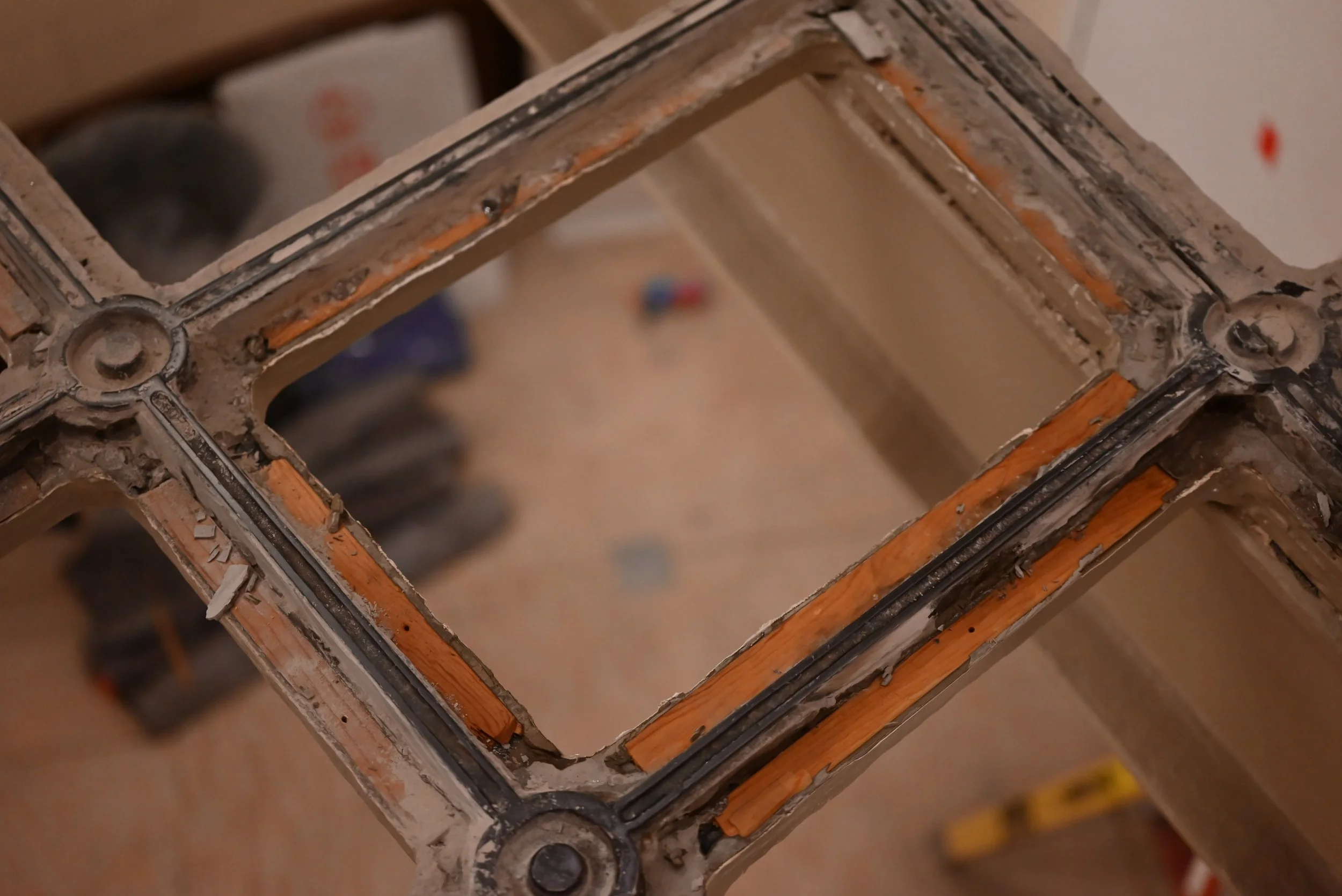
The 1930s tiles were thinner than the originals, thus wood shims were added to raise them to the correct level.
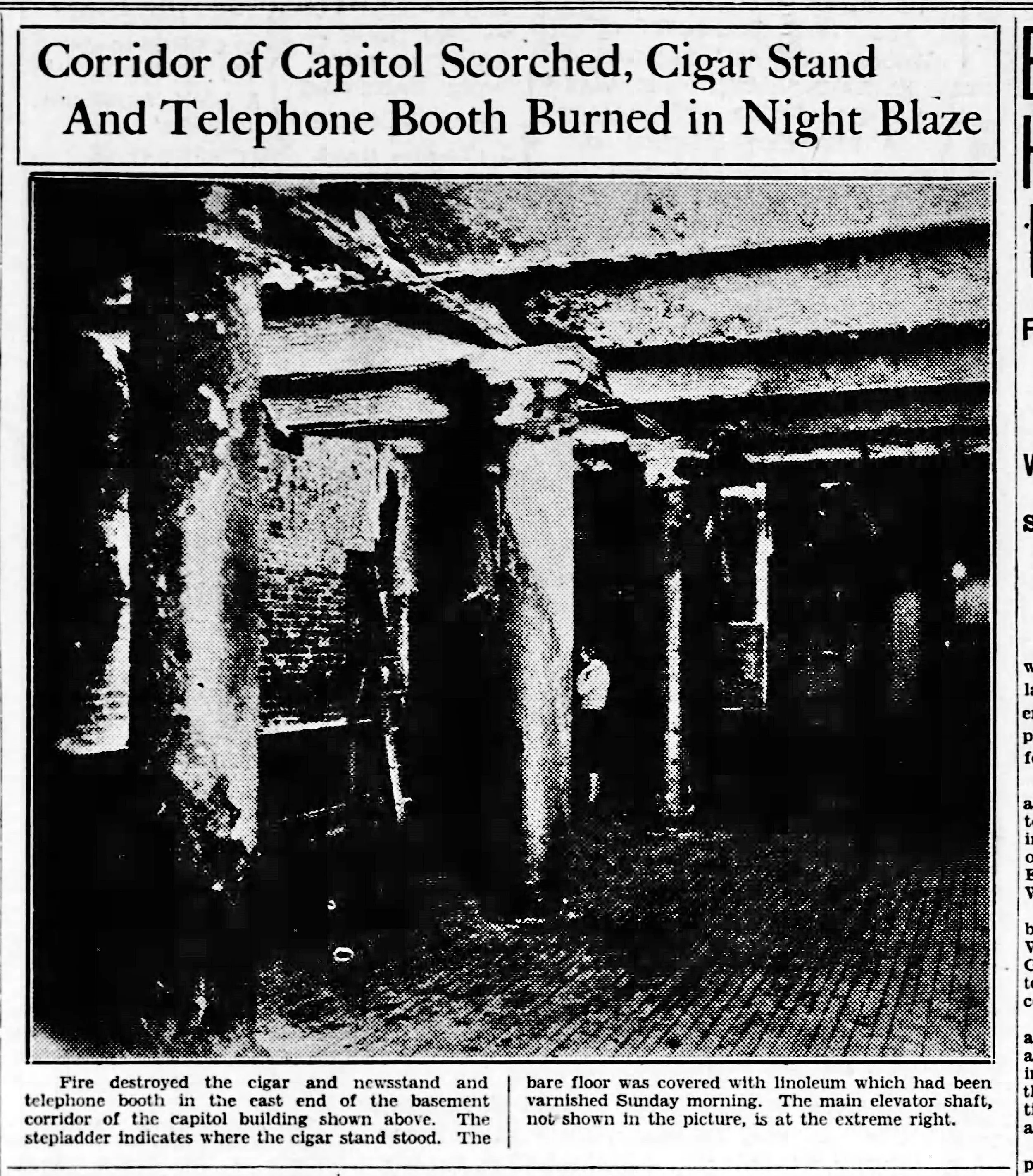
The 1931 fire led to the replacement of well over half of the glass floor tiles. No other photos of the fire are known to exist.
“Corridor of the Capitol Scorched…Burned in Night Blaze.” Lansing State Journal. January 19, 1931.
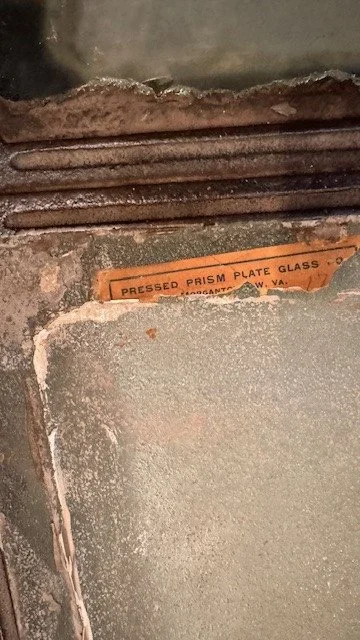
Survey work in 2024 uncovered a label underneath a previously thought to be original tile reading “Pressed Prism Plate Glass Co., Morgantown, West Virginia”
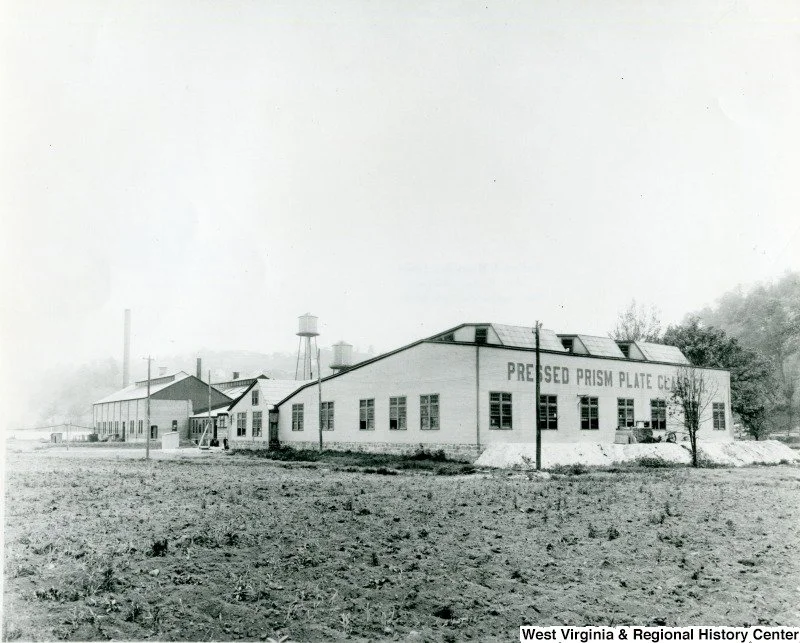
Factory of the Pressed Prism Plate Glass Company near Morgantown, West Virginia.
Image courtesy of West Virginia & Regional History Center.
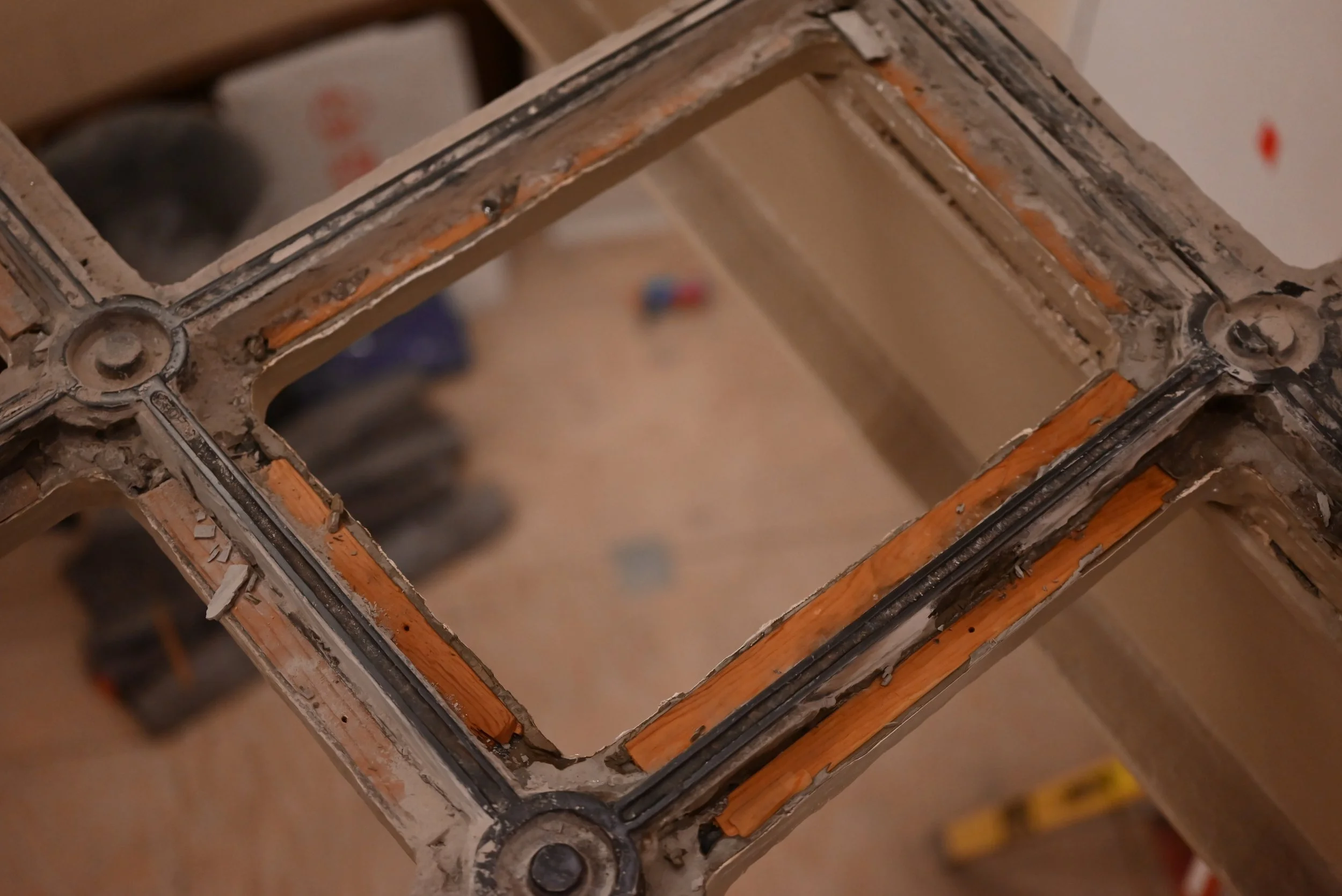
Because the 1930s tiles were 3/8” thinner than the original 1” thick tiles, wood shims were added to raise them to the correct level.

Throughout the 1970s and 1980s, broken glass floor tiles were replaced with plastic (Lexan) inserts. During the Capitol's 1987–1992 restoration, those inserts and other damaged tiles were replaced. Drawings were sent to the University of Michigan's College of Creative Studies, where 47 glass replicas were cast. We now know, though, these replicas were likely modeled after the 1930s replacement tiles rather than the original 1879 tiles.
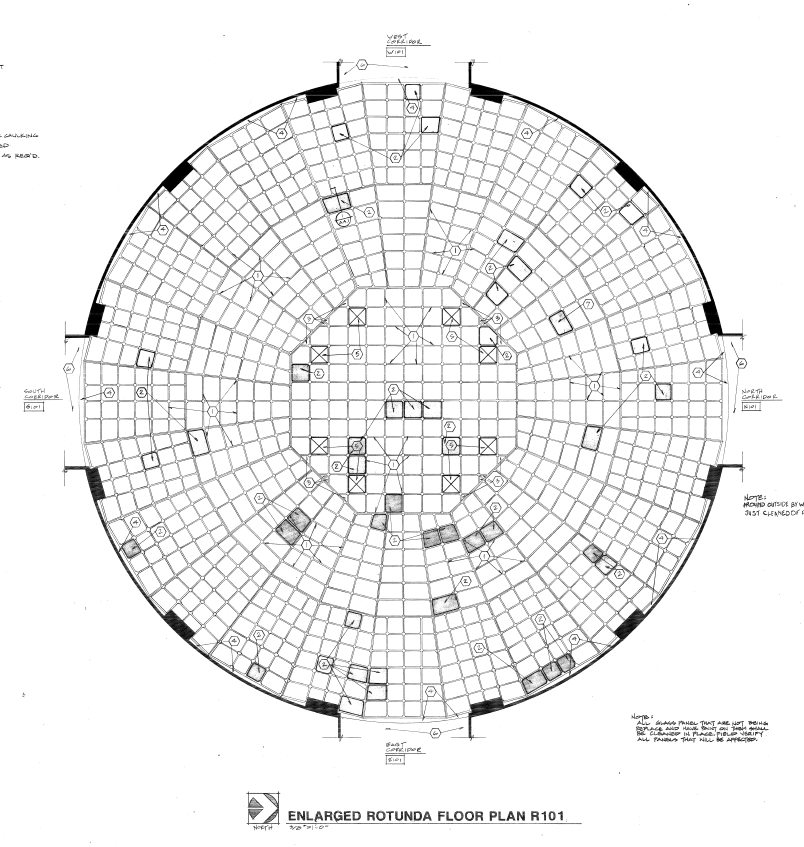
This architectural plan crafted by Wigen Tincknell Myer & Associates in 1990 identifies the 47 tiles to be replaced.
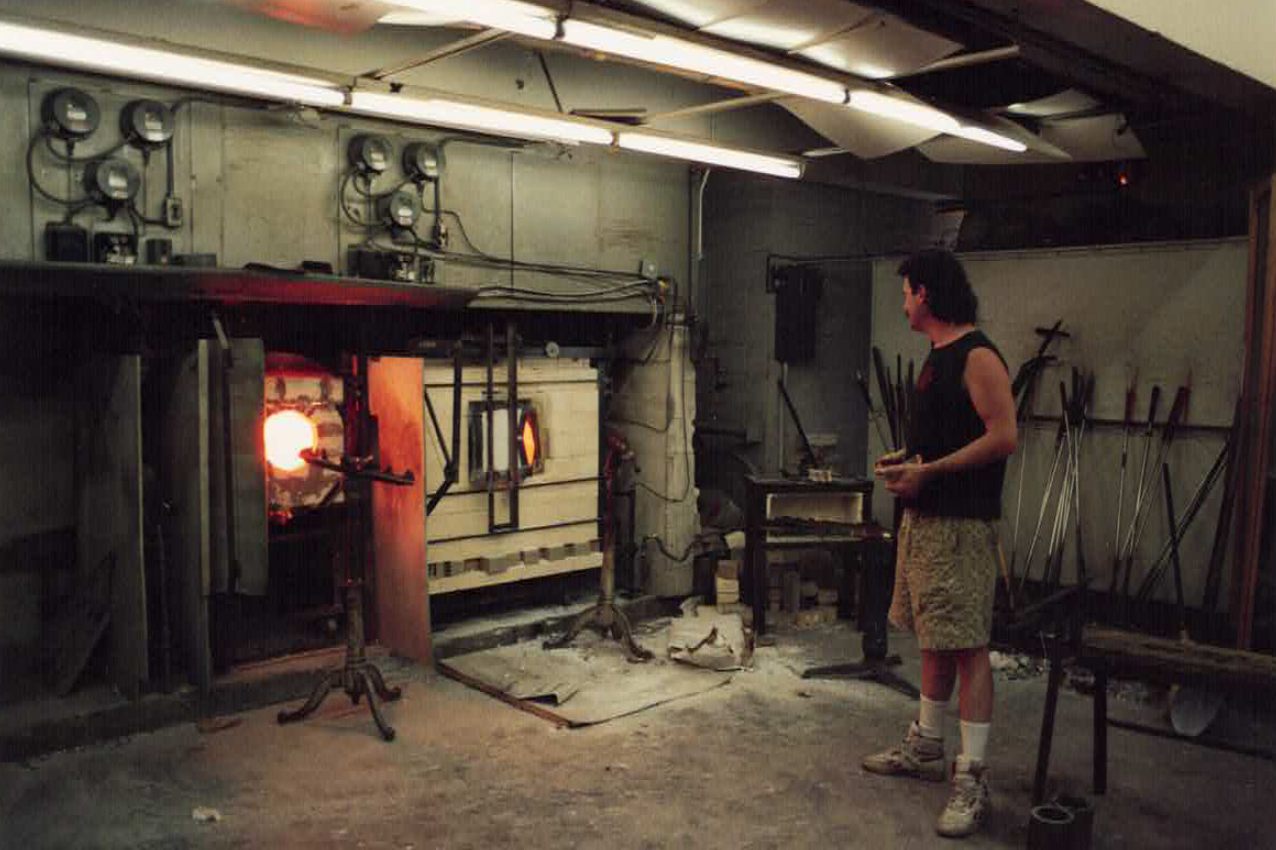
1991 photo of the College of Creative Arts glass studio where the 1991 glass tiles were produced.
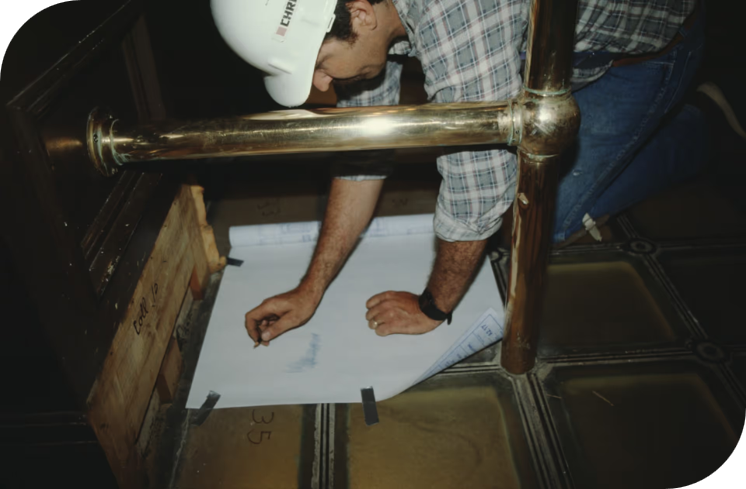
The Christman Company managed the project to restore the glass floor and its iron framework.
(Click on photos to enlarge)
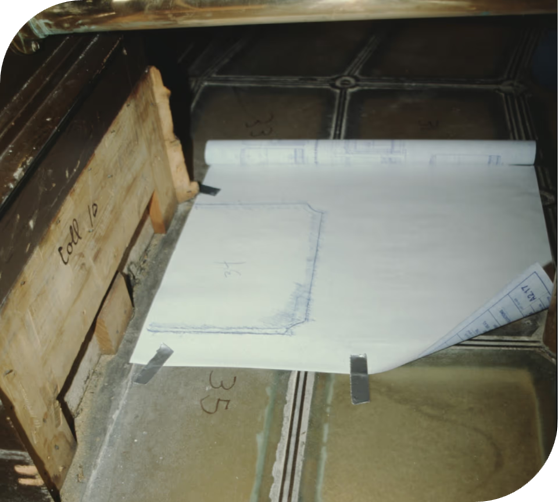
Tiles set to be replaced were traced on paper. This tracing was used to cut a plywood board to scale.
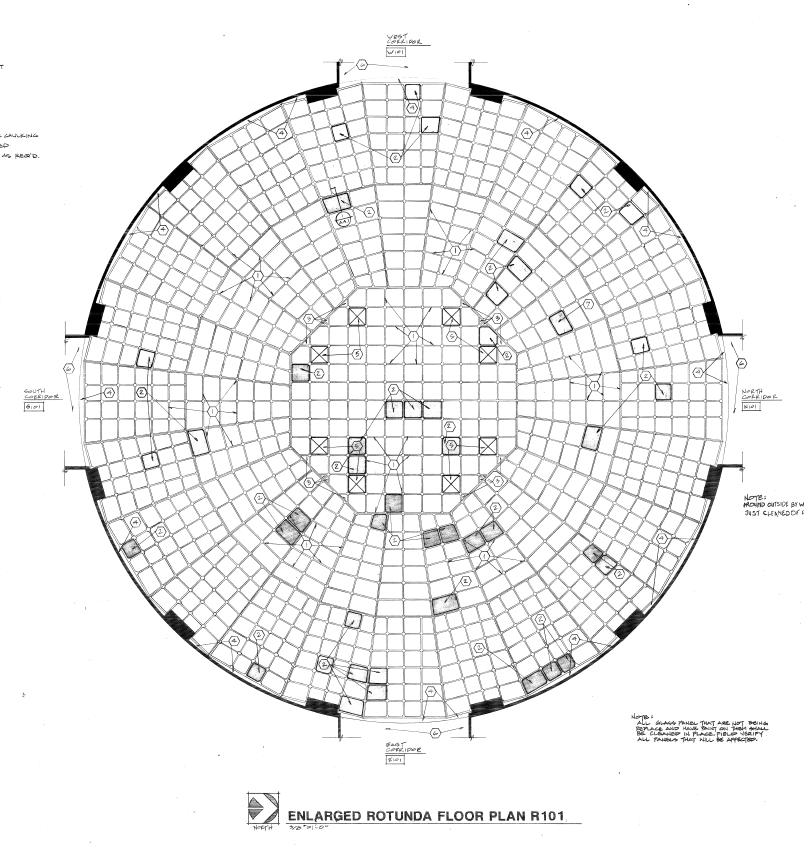
This architectural plan drawn by Wigen Tincknell Myer & Associates in 1990 identifies the 47 tiles to be replaced in 1991.
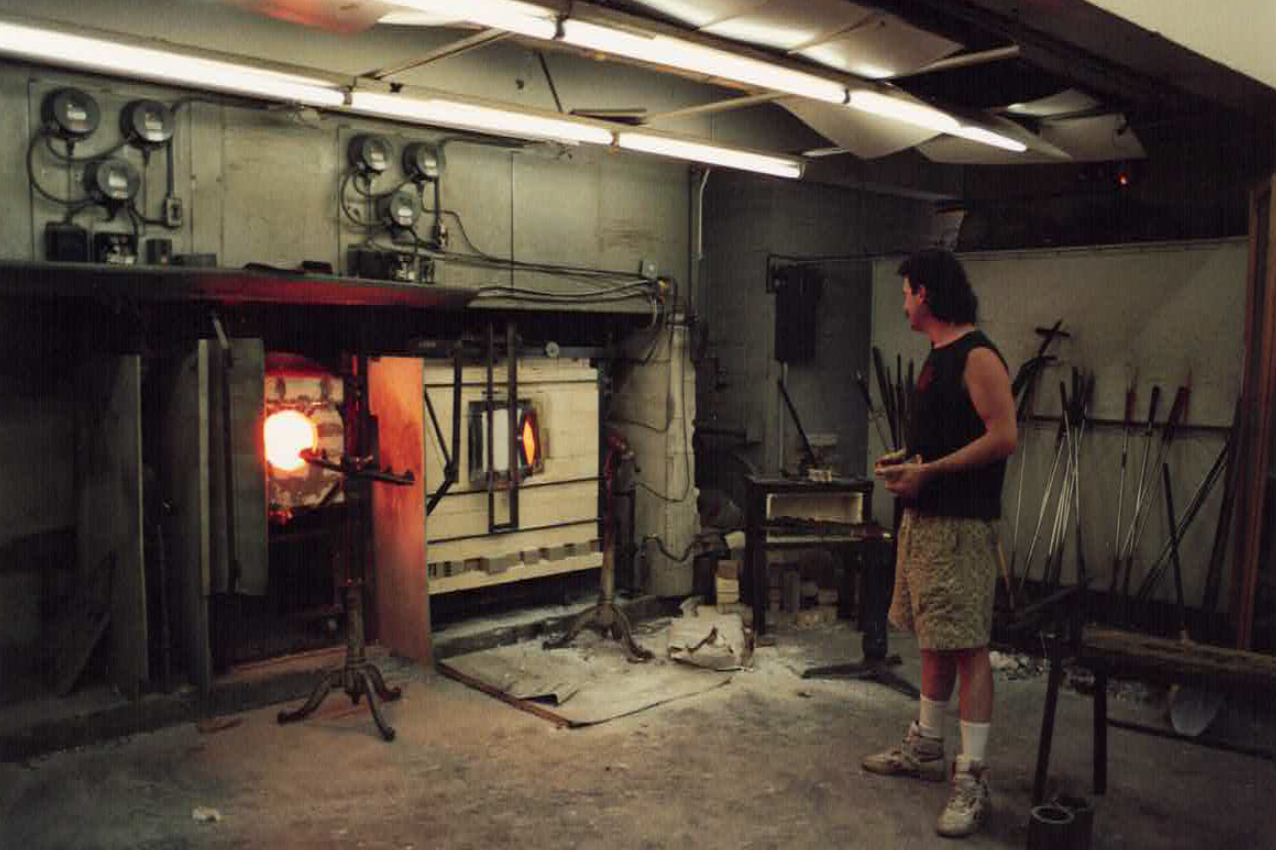
The University of Michigan’s College of Creative Arts glass studio cast the 47 tiles that were installed in 1991.
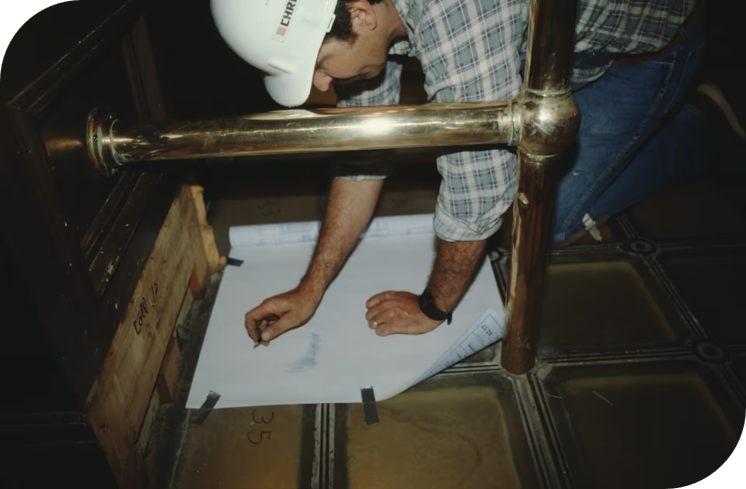
The Christman Company managed the project to restore the glass floor and its iron framework.
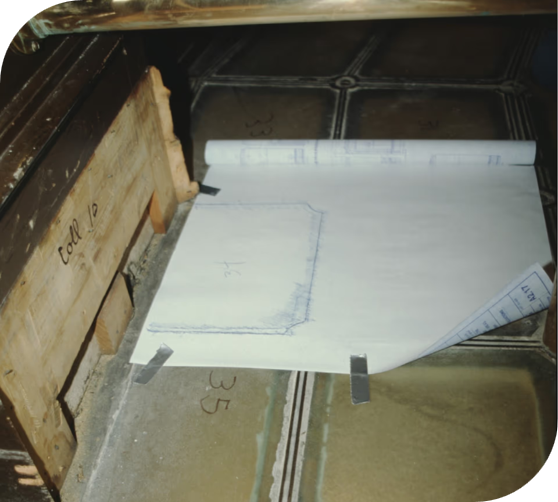
Tiles set to be replaced were traced on paper. This tracing was used to cut a plywood board to scale. New tiles were cast to the dimensions of the boards.

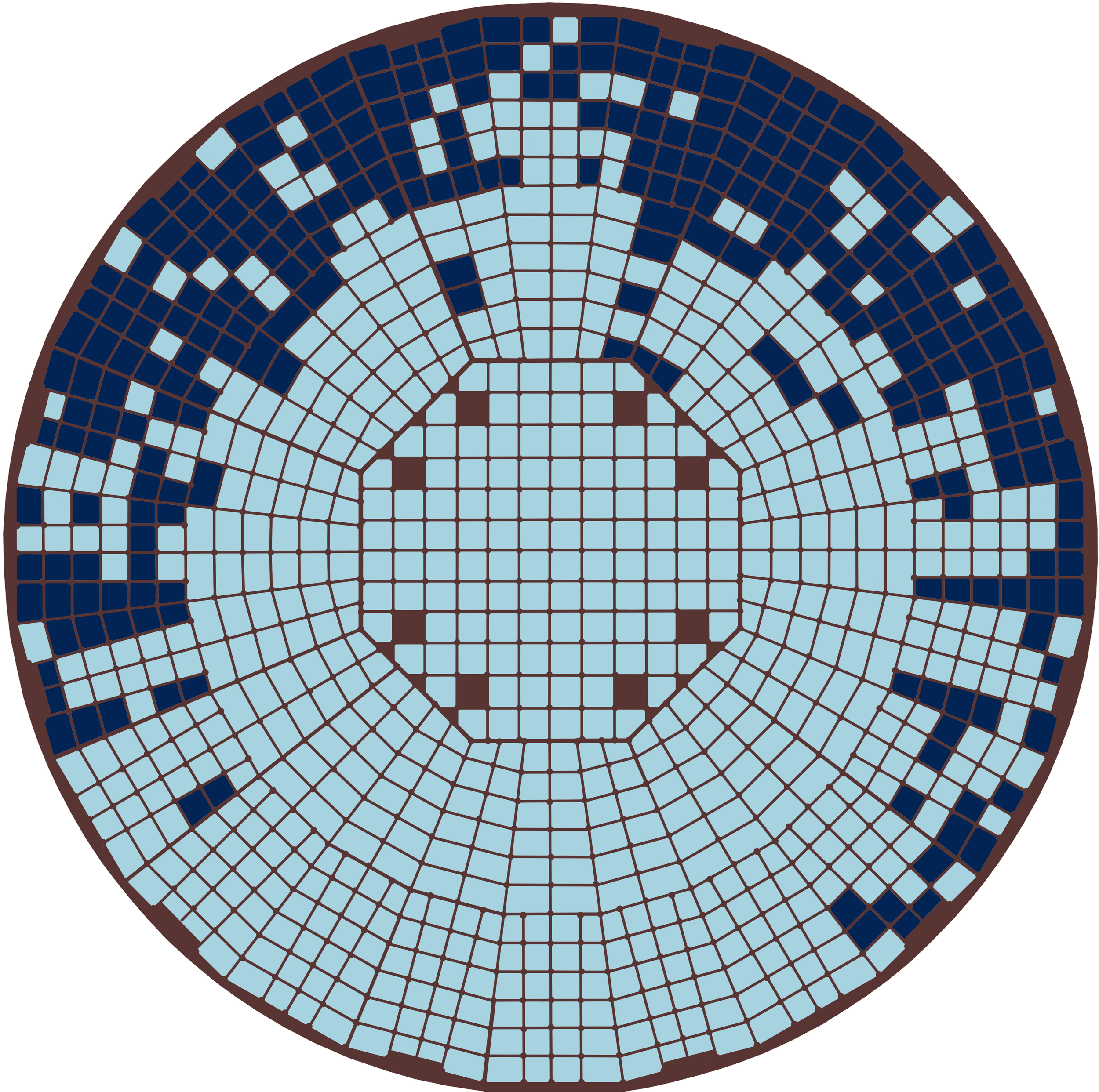
Before work began, Executive Director Rob Blackshaw led a comprehensive survey to determine which glass floor tiles were original and which had been replaced in 1931 and during the 1987–1992 restoration. The survey findings, shown in the diagram, guided the replacement of the non-original tiles throughout the floor.

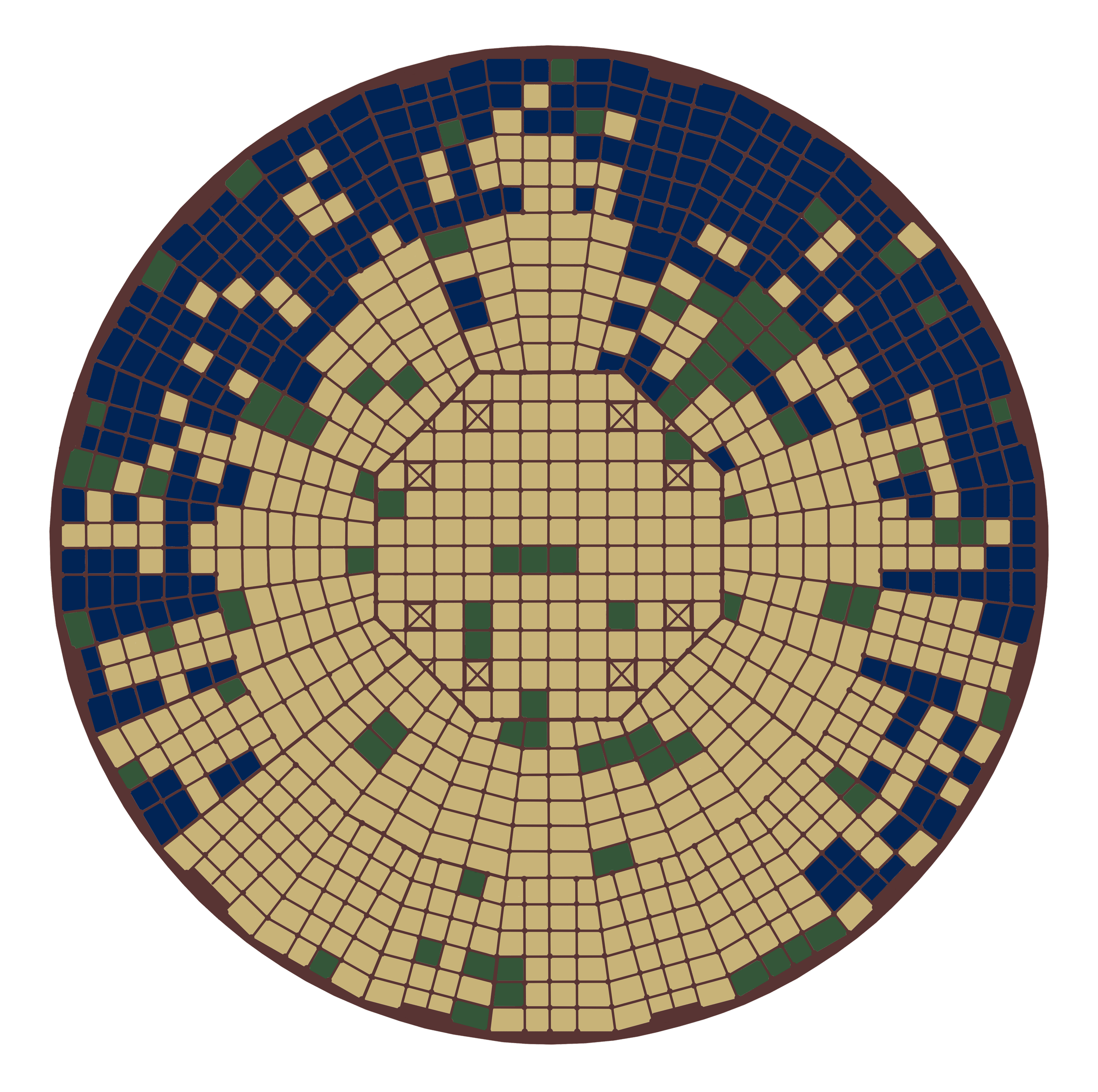

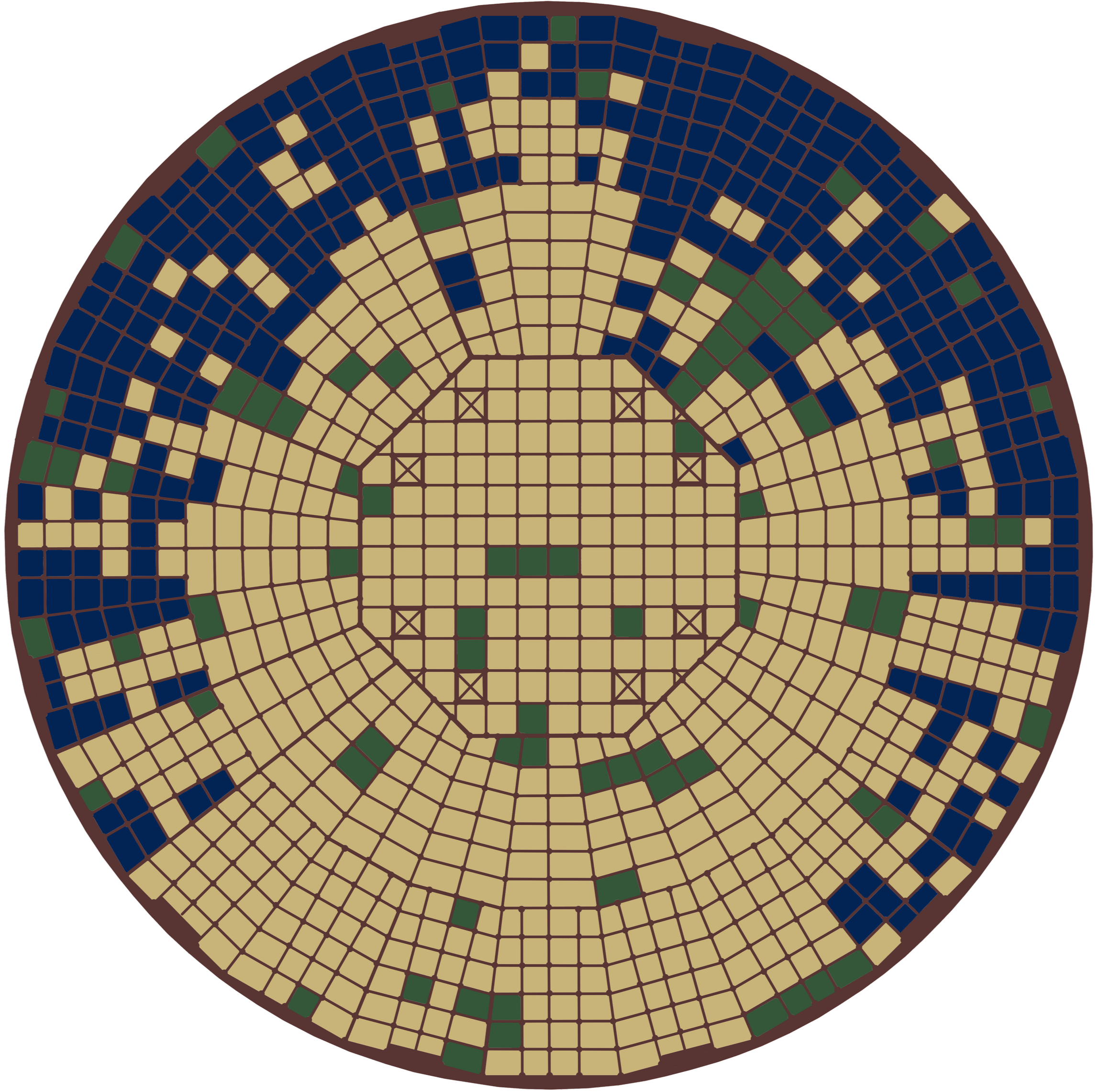

You'll notice the majority of the remaining original tiles are toward the west end. The 1931 fire occurred underneath the east end.

You are here
As work progressed, additional tiles were identified for replacement. In total, 696 of the floor's 976 tiles were replaced, restoring its intended uniform appearance while preserving 280 original 1879 tiles.


You are here
Removing the glass tiles was a meticulous process. Artisans used an oscillating saw to cut through decades-old grout before cleaning the cast-iron frame and removing the wood shims that propped up each 1930s tile.
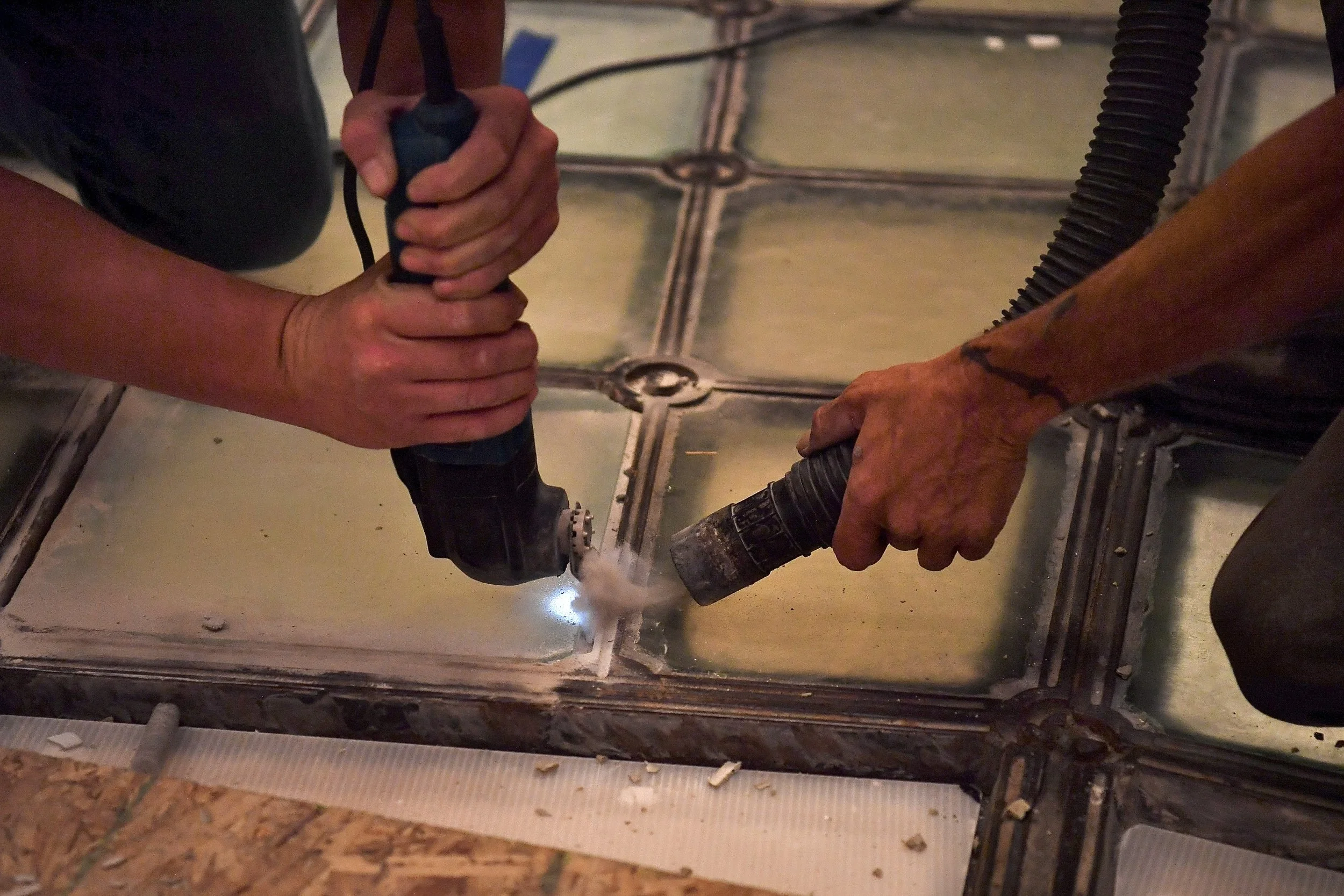
Workers were careful to limit dust before it could settle on the beautifully restored rotunda artwork.
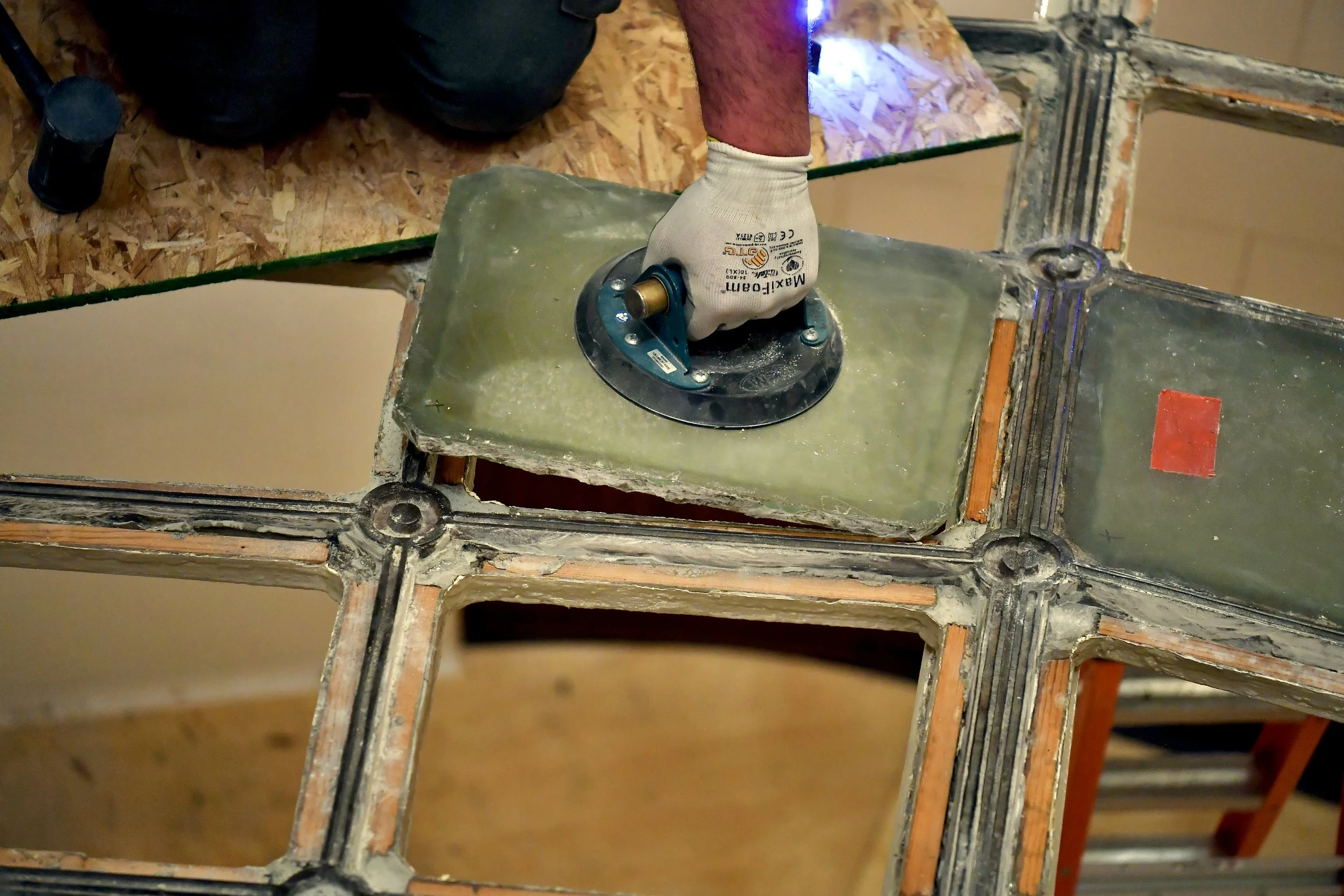
Loosened from the grout, the tiles were lifted out of their iron framework using vacuum suction cups.
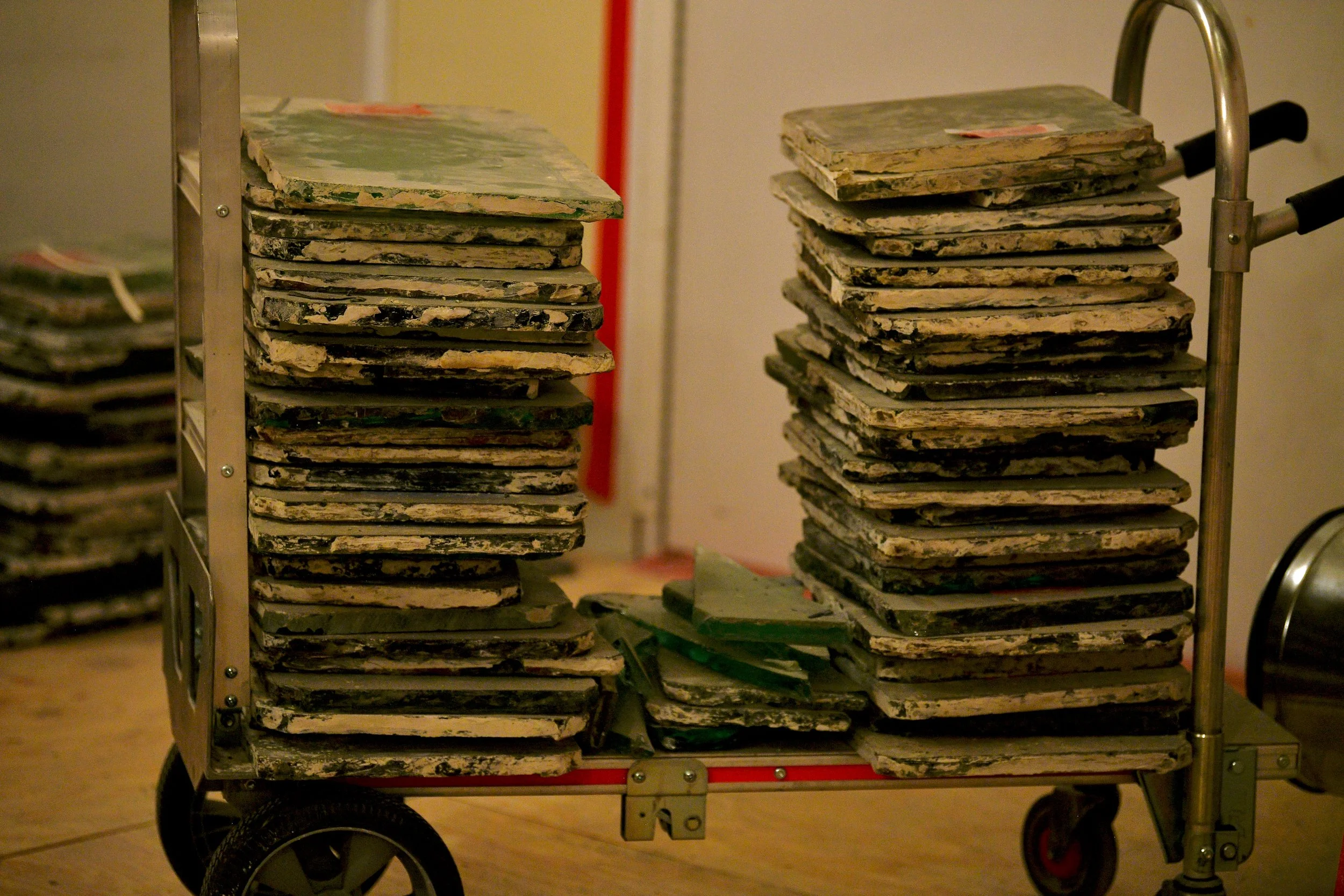
Upon removal, the old tiles were put into museum storage for use in future exhibit and reference work.
(Click on photos to enlarge)
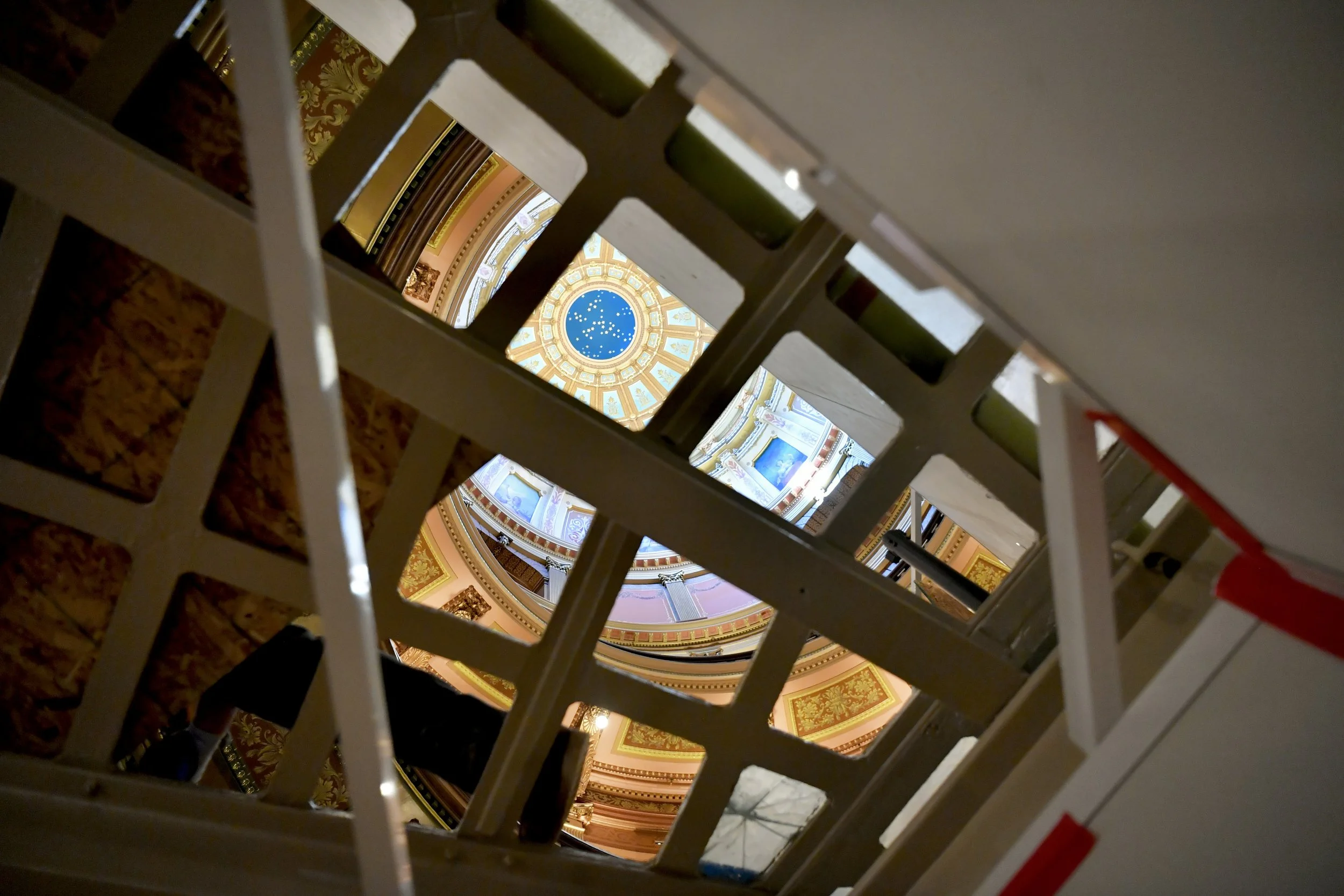
For a brief time, the open floor offered an extraordinary view of the stars painted on the Rotunda ceiling above.
Workers were careful to limit the spread of dust before it could settle on the beautifully restored rotunda artwork.
Image courtesy of Dave Thompson Photography.
Loosened from the old grout, the tiles were lifted out of their iron framework using vacuum suction cups.
Image courtesy of Dave Thompson Photography.
Upon removal, the old tiles were put into museum storage for use in future exhibit and reference work.
Image courtesy of Dave Thompson Photography.
For a brief time, the open floor offered an extraordinary view of the stars painted on the Rotunda ceiling above.
Image courtesy of Dave Thompson Photography.
After the cast-iron frame was cleaned, foam striping and caulk created a stable bed for the new glass. A caulk matched to the color of the original grout was selected as a more durable, reversible alternative that will simplify future preservation work.
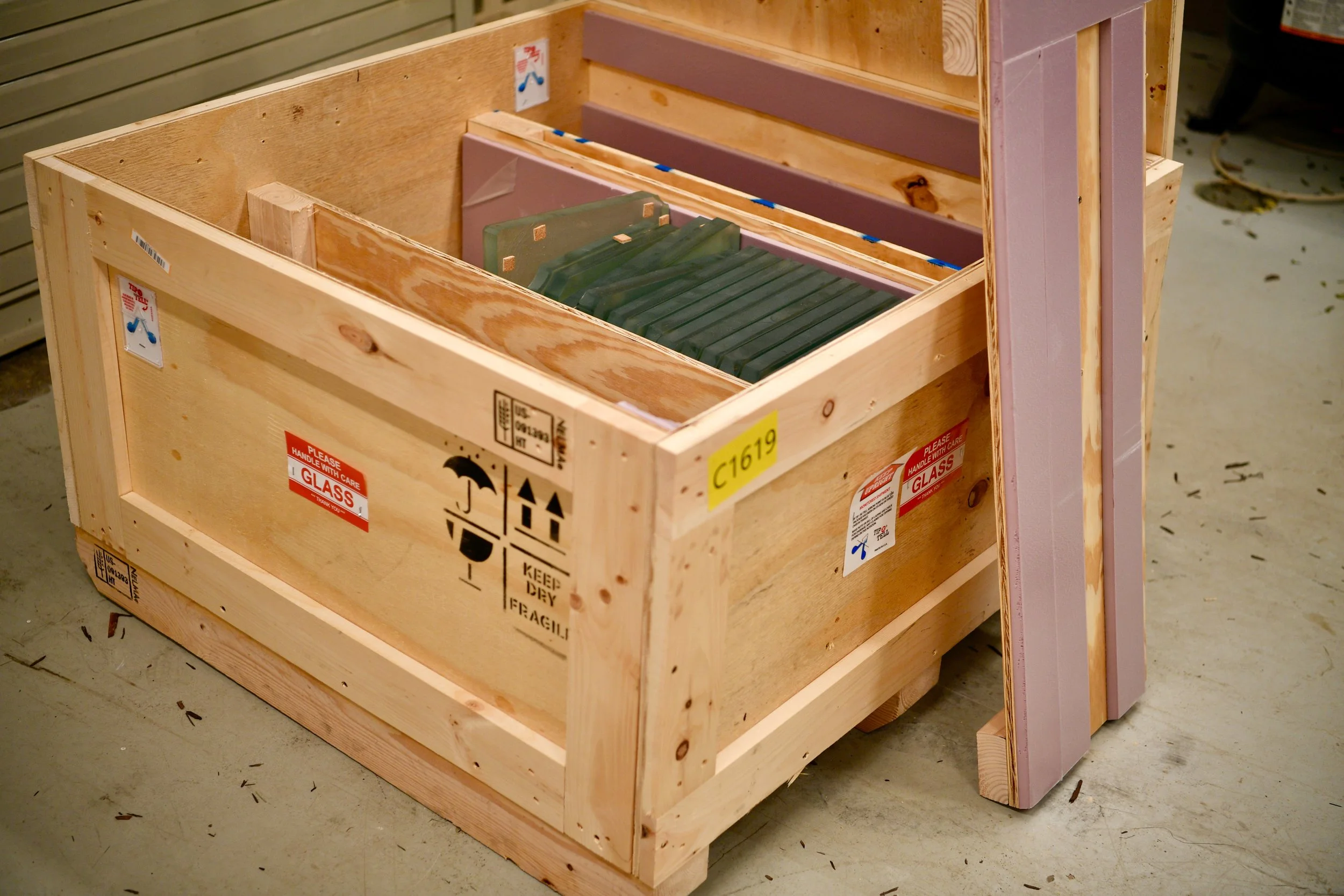
New glass tiles arrived in carefully packed crates from Lucid Glass Studio in Providence, Rhode Island.
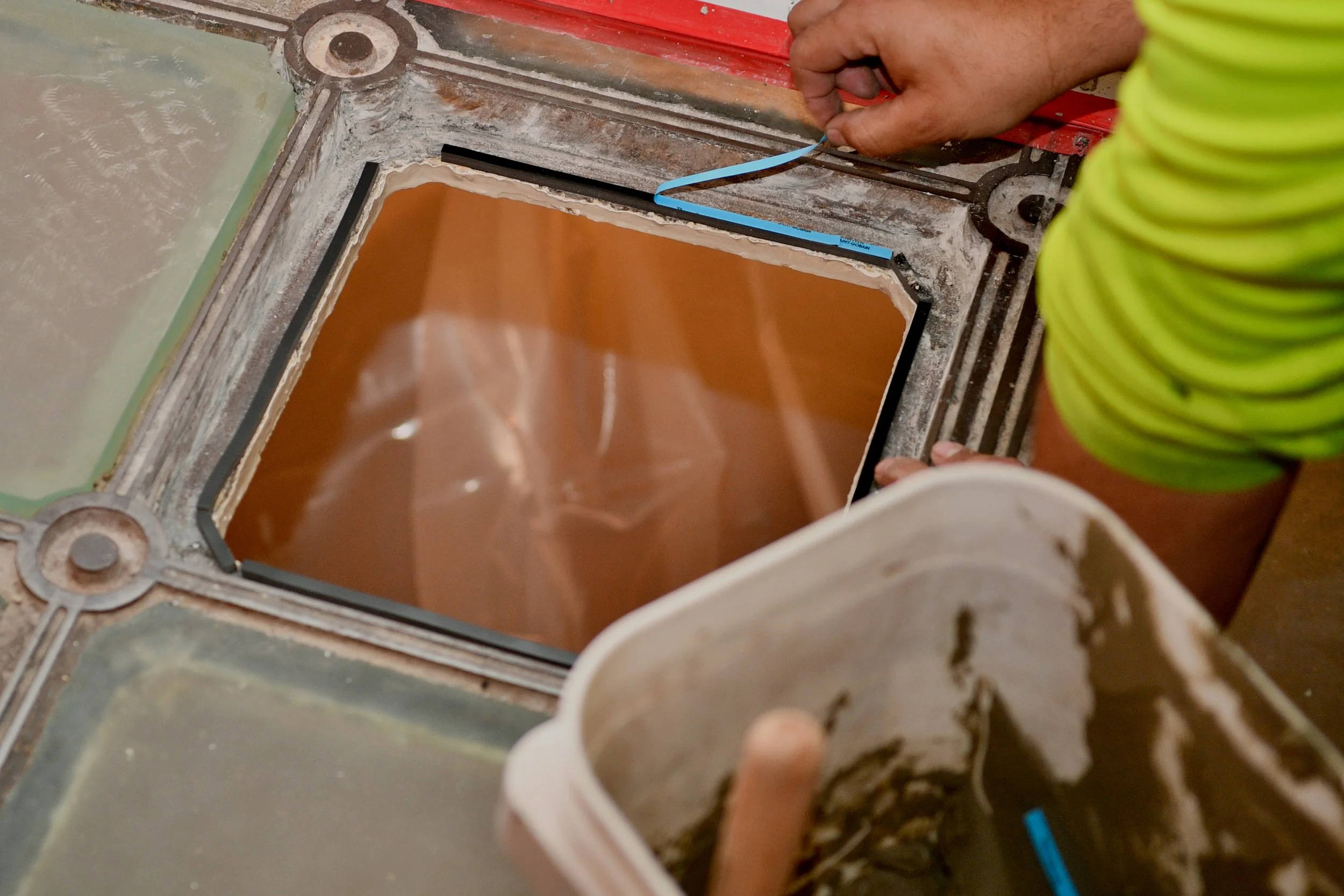
¼-inch foam striping was installed within the cast-iron frame to cushion and support the new glass tiles.
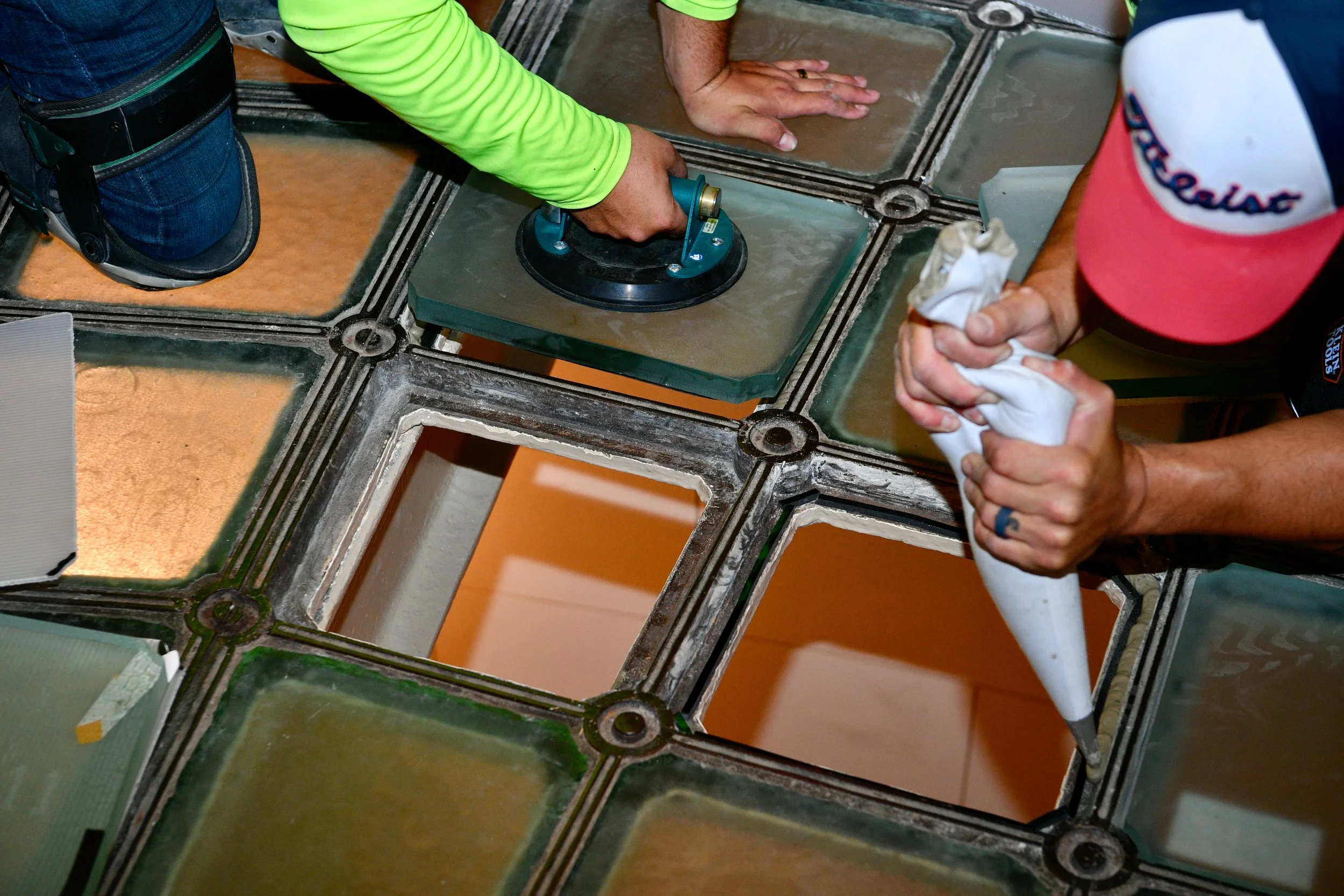
Caulk was applied around the foam to create a secure bed for the new glass before each tile was set in place.
(Click on photos to enlarge)
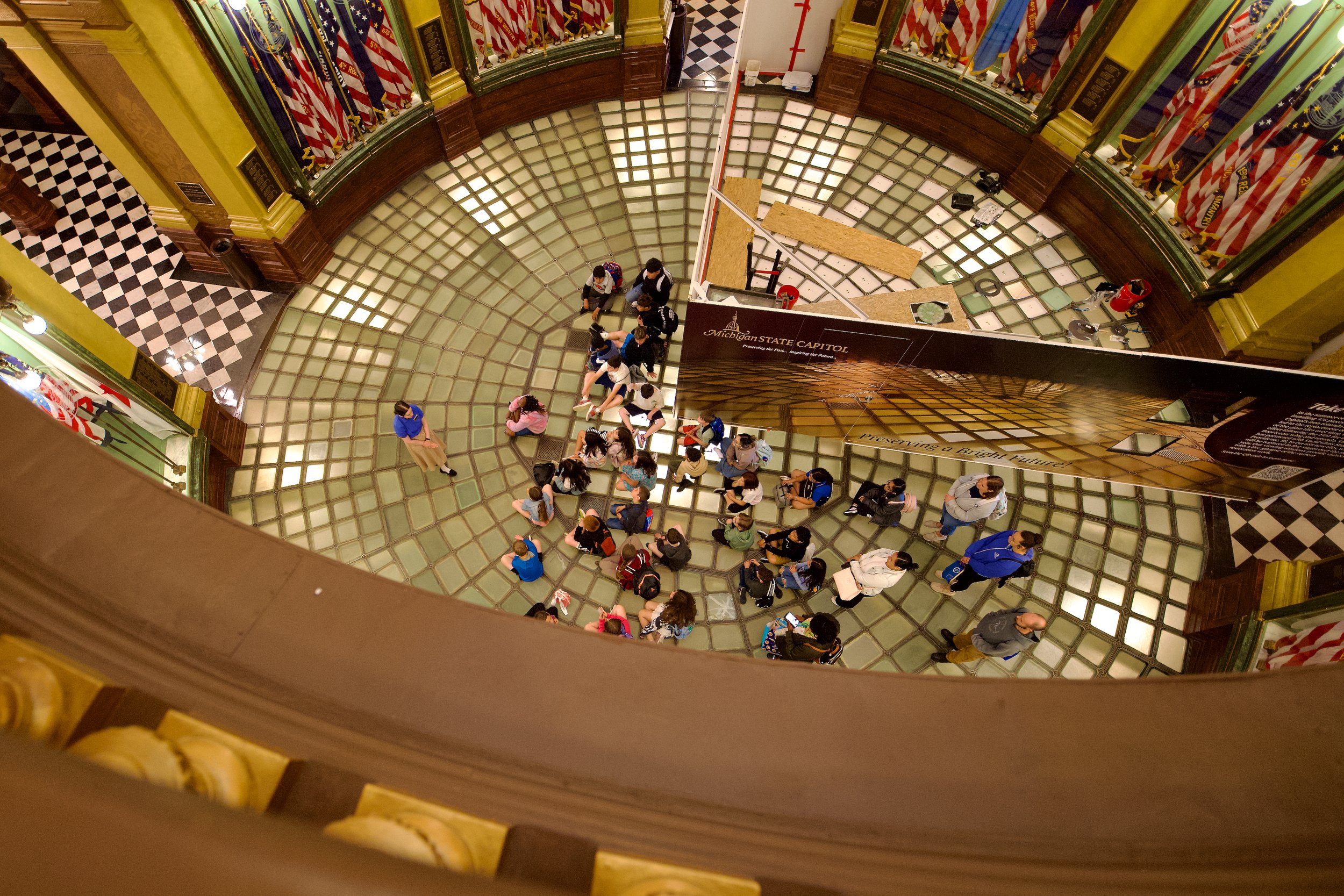
A protective wall with viewing windows allowed visitors to watch the restoration work while keeping the floor accessible.
New glass tiles arrived in carefully packed crates from Lucid Glass Studio in Providence, Rhode Island.
Image courtesy of Dave Thompson Photography.
¼-inch foam striping was installed within the cast-iron frame to cushion and support the new glass tiles.
Image courtesy of Dave Thompson Photography.
Caulk was applied around the foam striping to create a secure bed for the new glass before each tile was set in place.
A protective wall with viewing windows allowed Capitol visitors to watch the restoration work while keeping the floor accessible throughout the project.
Image courtesy of Dave Thompson Photography.
After the cast-iron frame was cleaned, foam striping and caulk created a stable bed for the new glass. A caulk matched to the color of the original grout was selected as a more durable, reversible alternative that will simplify future preservation work.
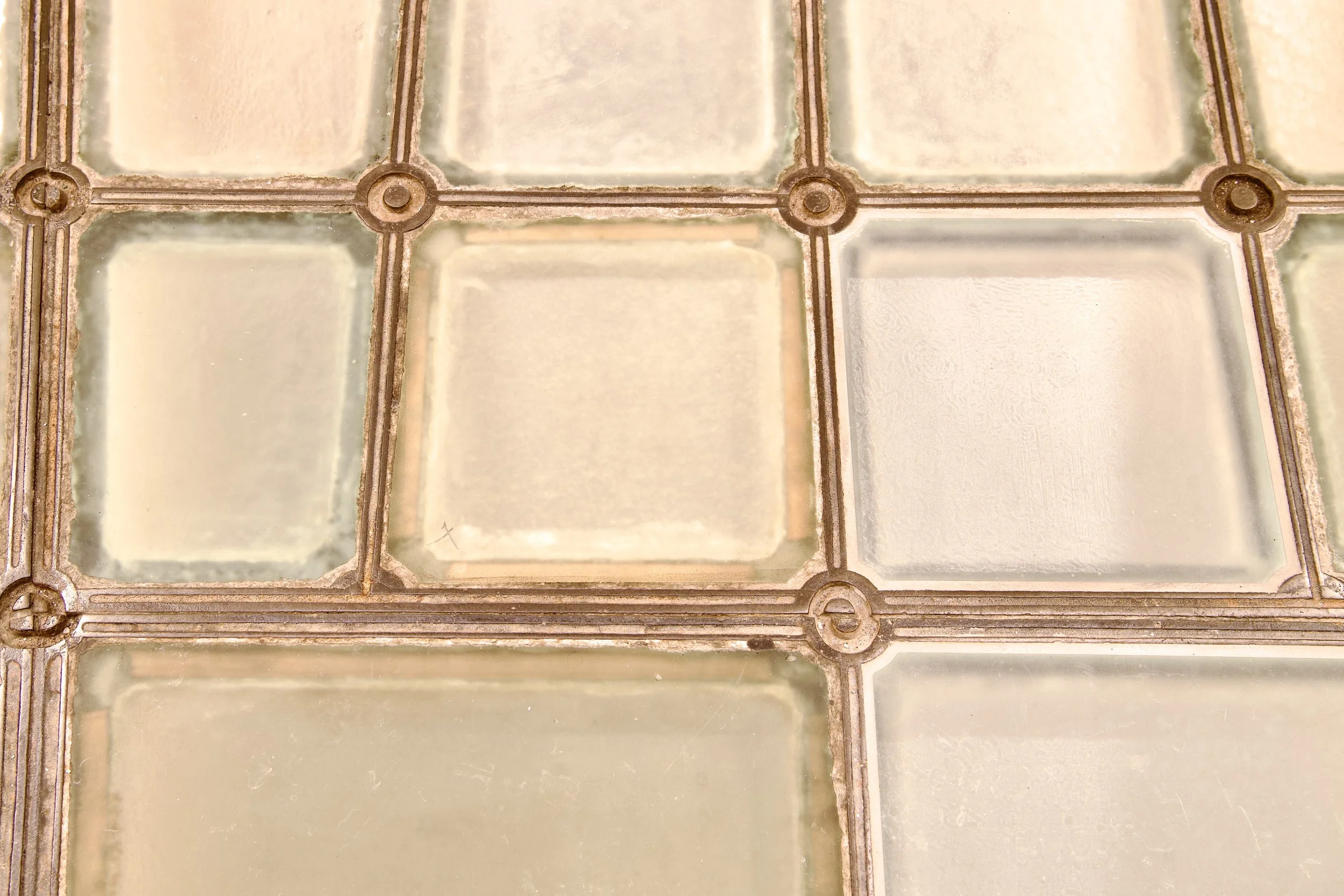
This photo shows an 1878 tile (left), 1930s tile (center), and a 2025 tile (right).
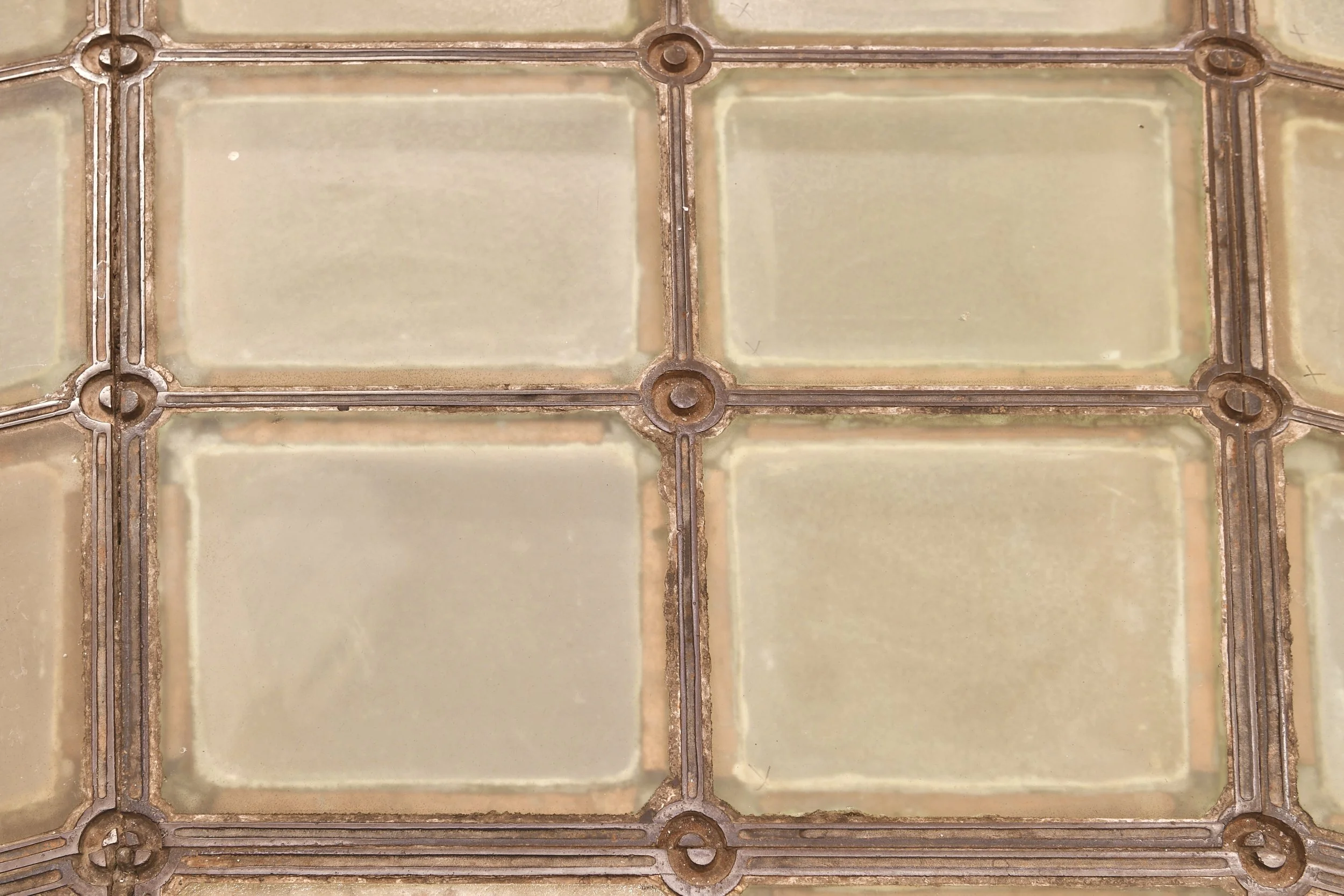
This photo shows a grouping of 1930s tiles. Note the wood shims that can be seen underneath each edge of the tiles.
(Click on photos to enlarge)
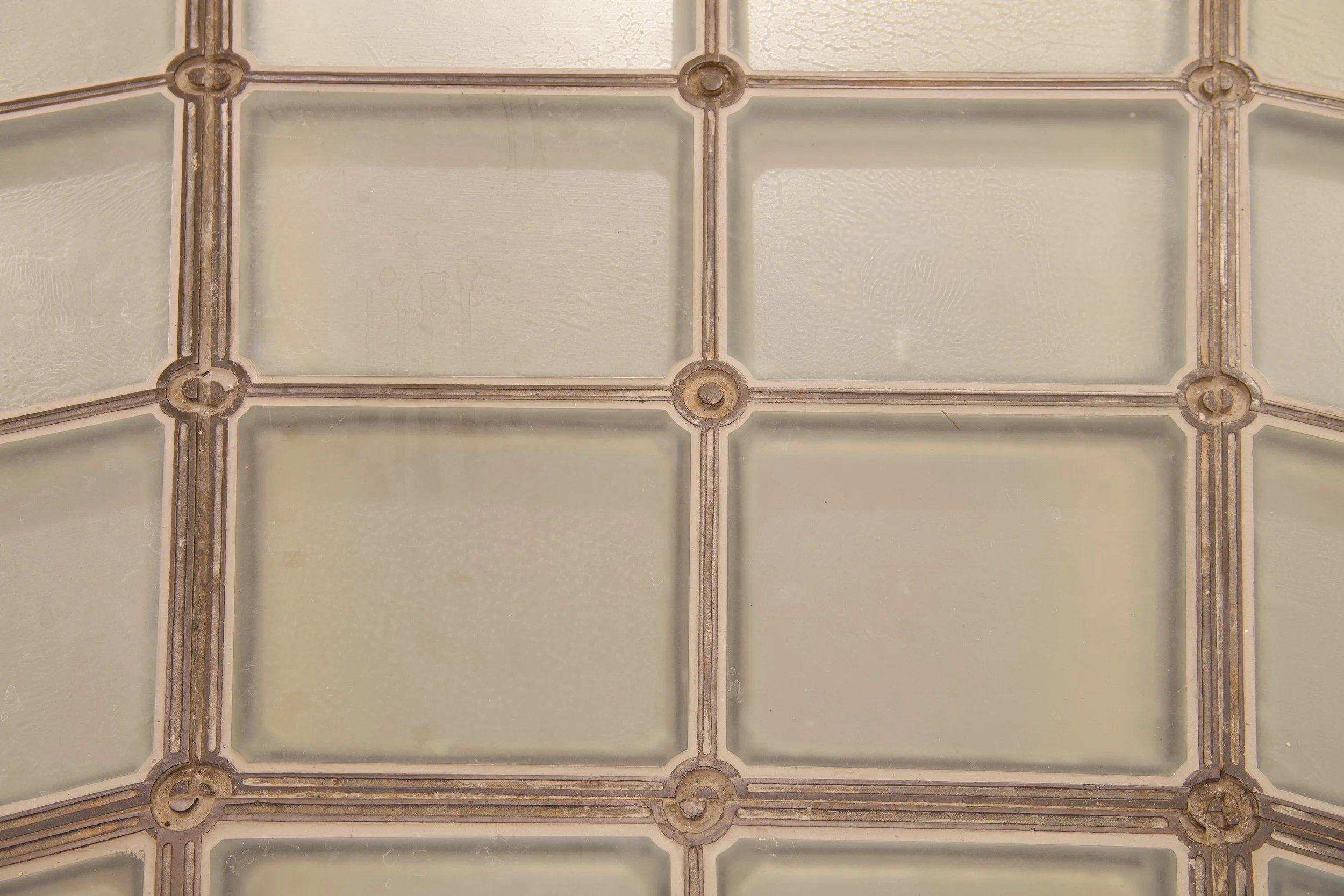
This photo shows a grouping of 2025 tiles. Overtime, natural wear will darken the caulk and roughen the edges of the tiles.
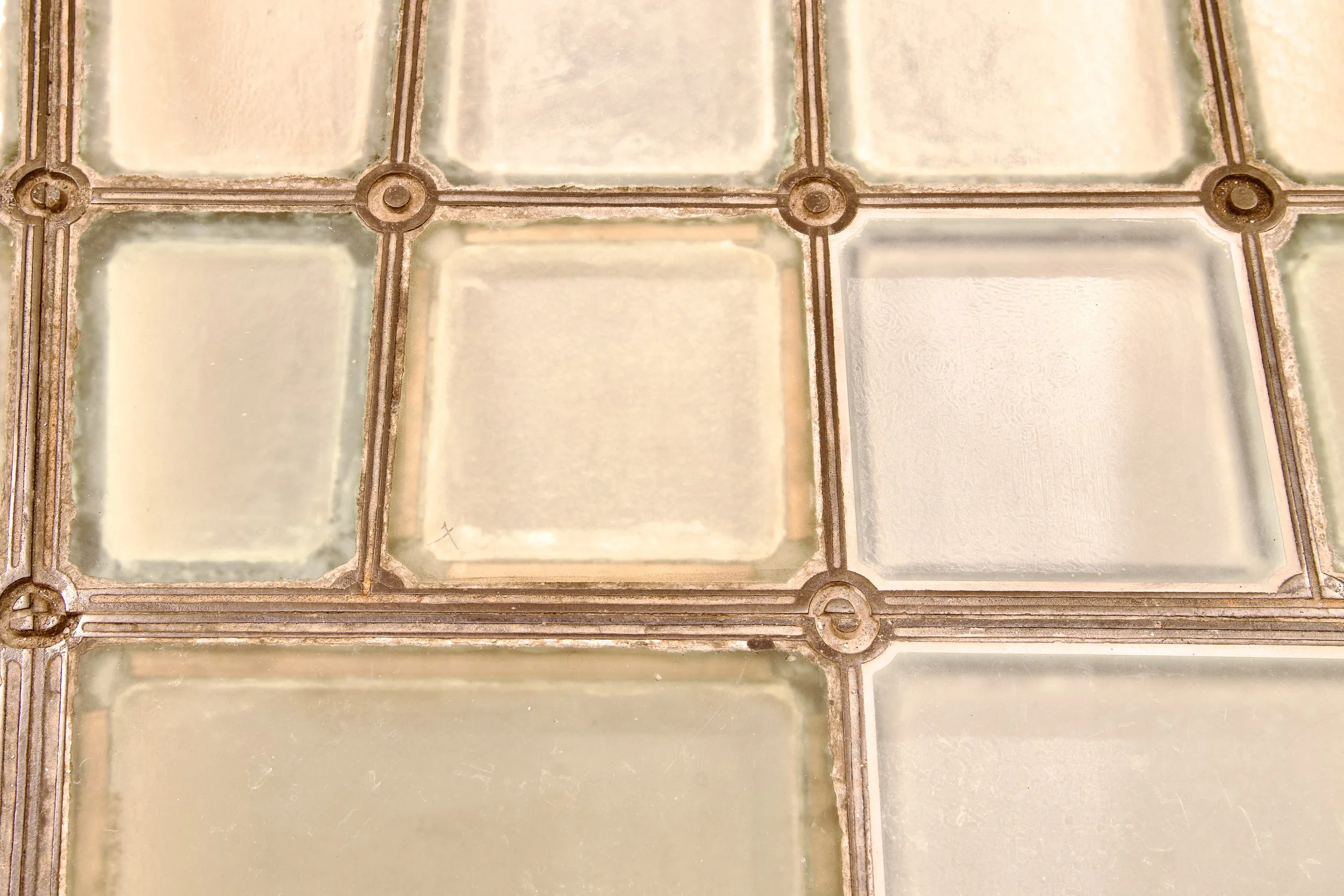
This photo shows an 1878 tile (left), 1930s tile (center), and a 2025 tile (right).
Image courtesy of Dave Thompson Photography.
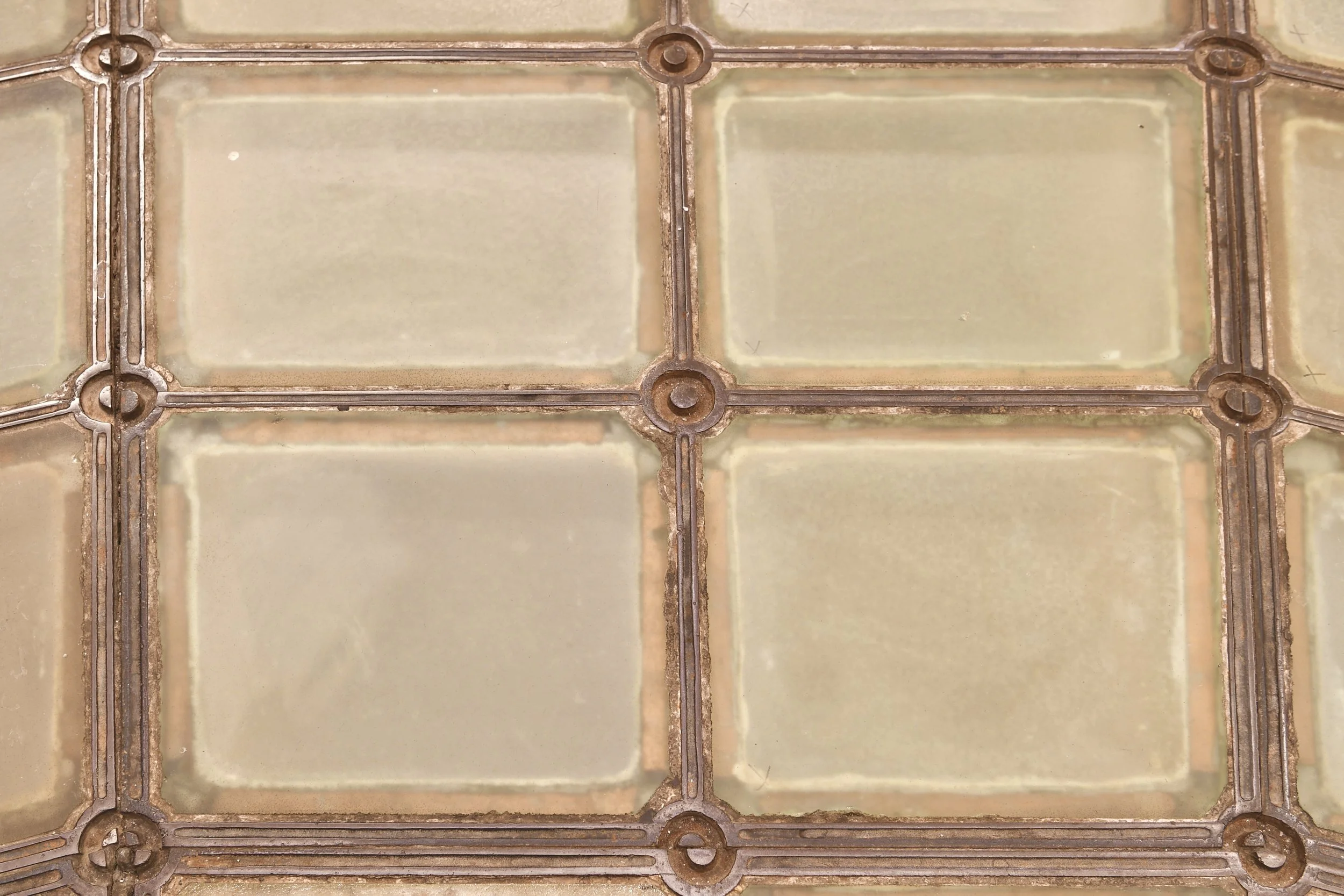
This photo shows a grouping of 1930s tiles. Note the wood shims that can be seen underneath each edge of the tiles.
Image courtesy of Dave Thompson Photography.
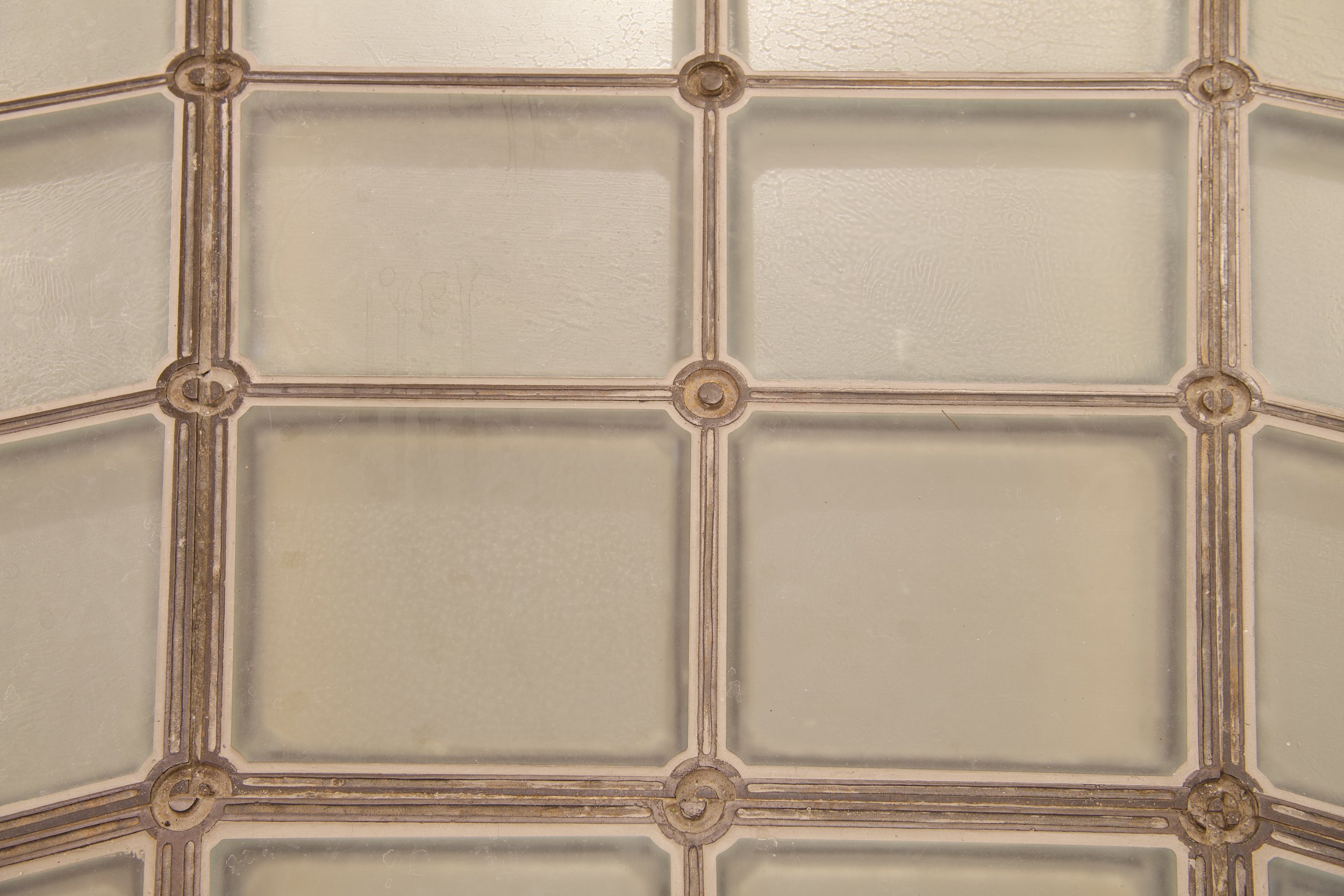
This photo shows a grouping of 2025 tiles. Overtime, natural wear will darken the caulk and roughen the edges of the tiles.
Image courtesy of Dave Thompson Photography.
Text here about the contrast of the before and afters. Text here about the contrast of the before and afters. And maybe a little more text here to fill out two lines.
Before the restoration.
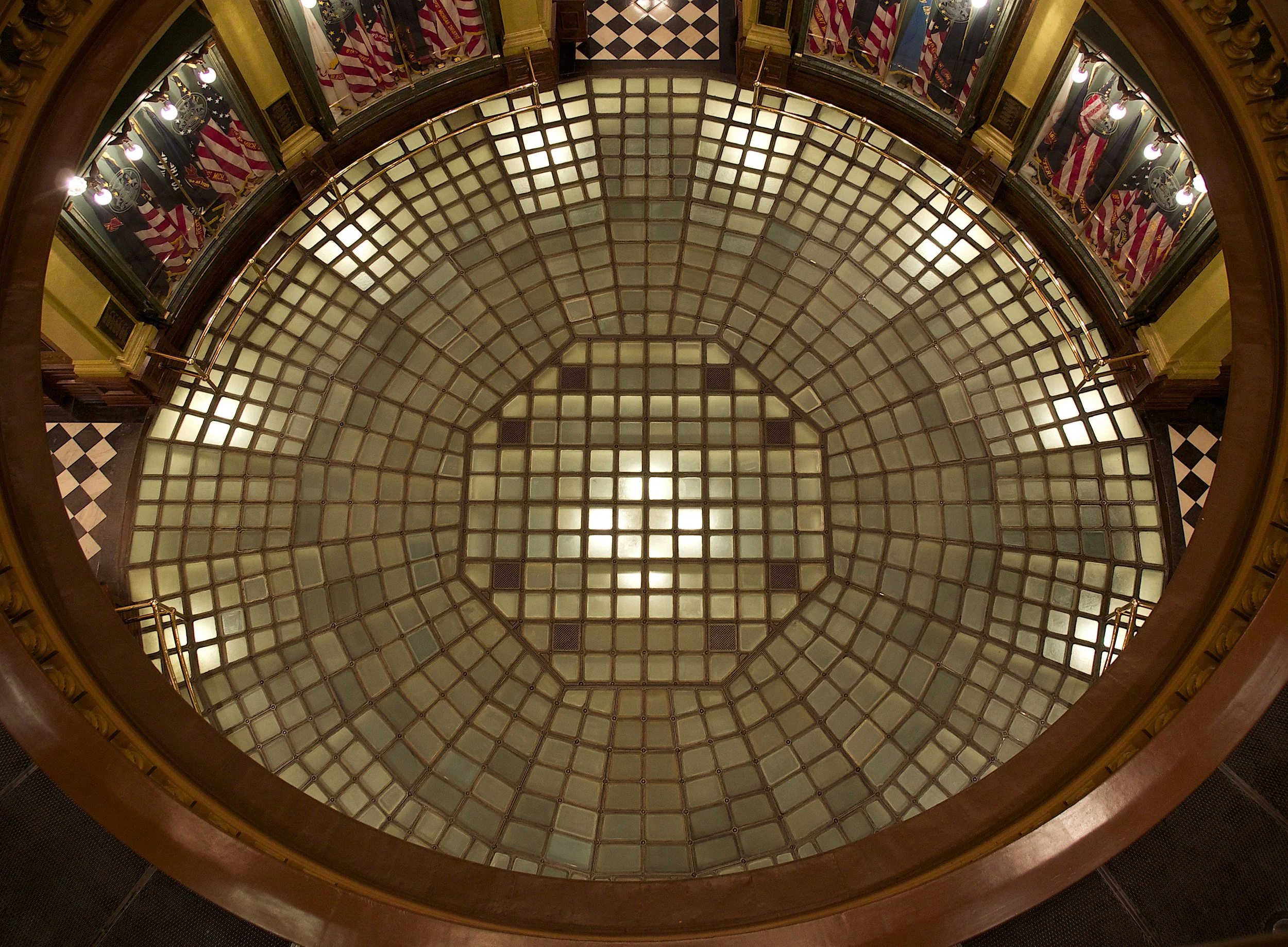
(Click on photos to enlarge)
After the restoration.
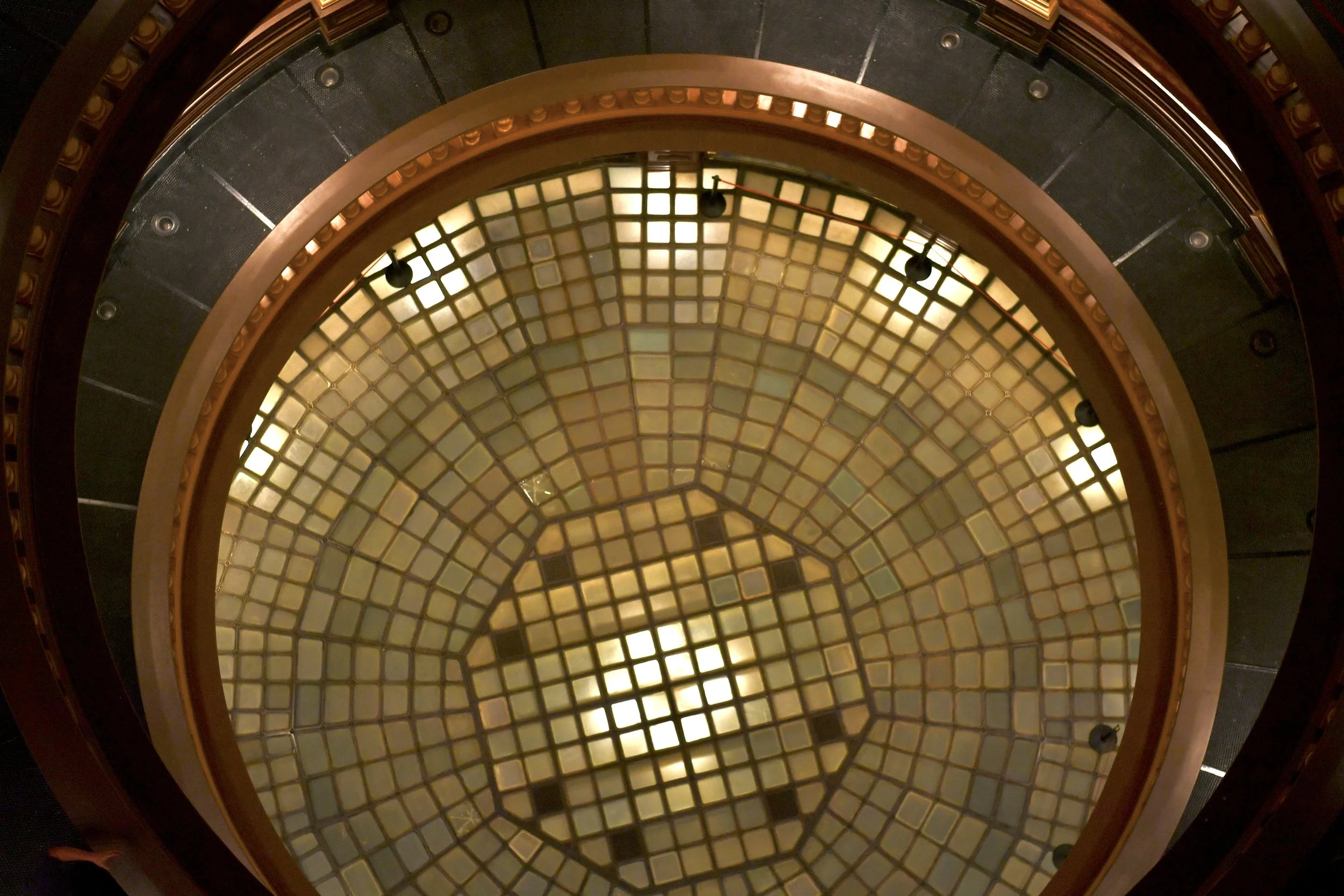
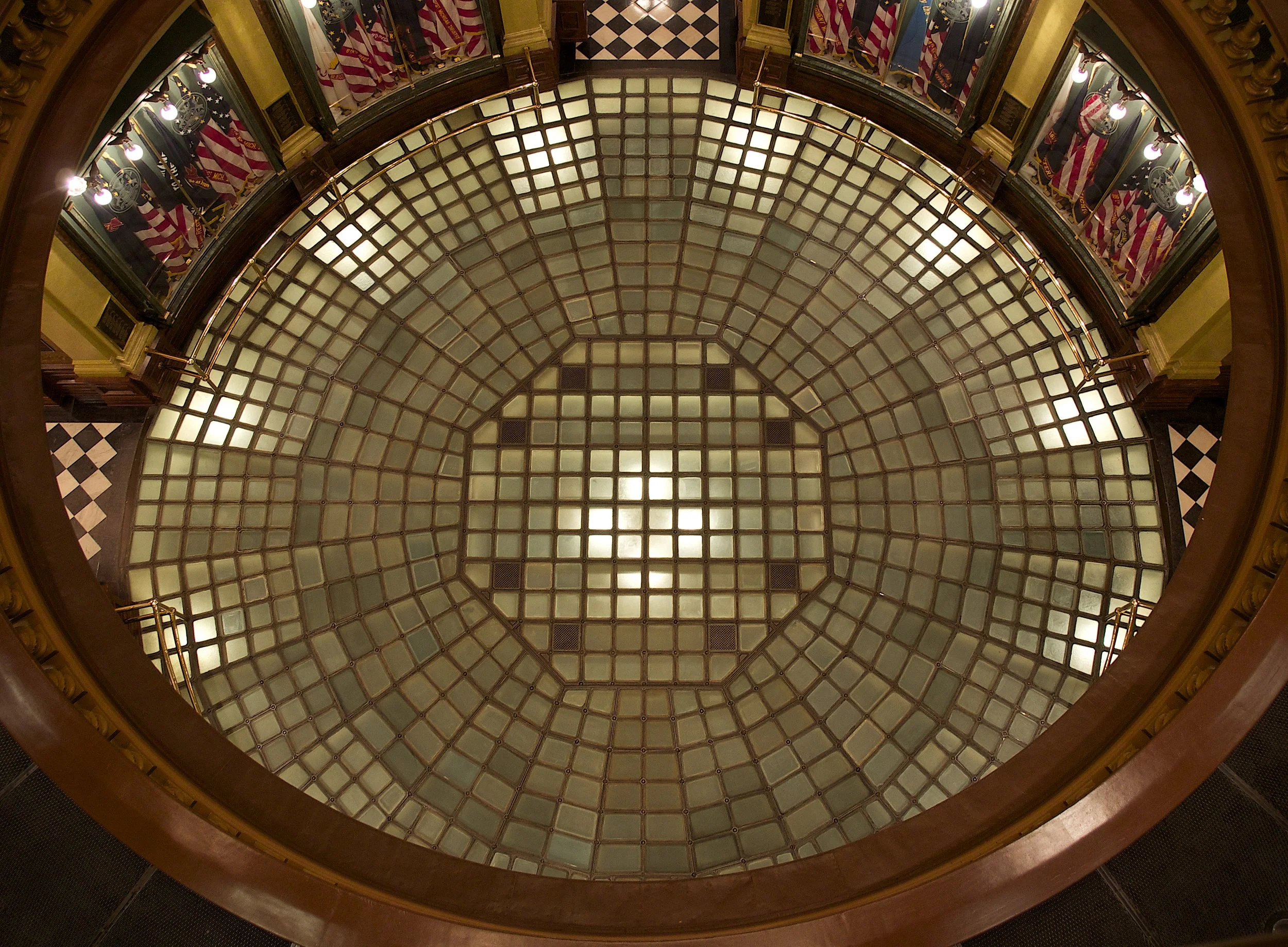
Before the 2025-2026 Restoration.
Image courtesy of David Marvin.
After the 2025-2026 Restoration.
Image courtesy of Dave Thompson.

A key factor in making this project possible was finding the right contractors for the job - a team that could not only recreate glass tiles to match the originals, but that would also understand the importance of the project. With an impressive portfolio of work, including historic glass floor restorations, Lucid Glass Studio of Providence, Rhode Island was selected for the job.

The team at Lucid Glass Studio in East Providence, Rhode Island.
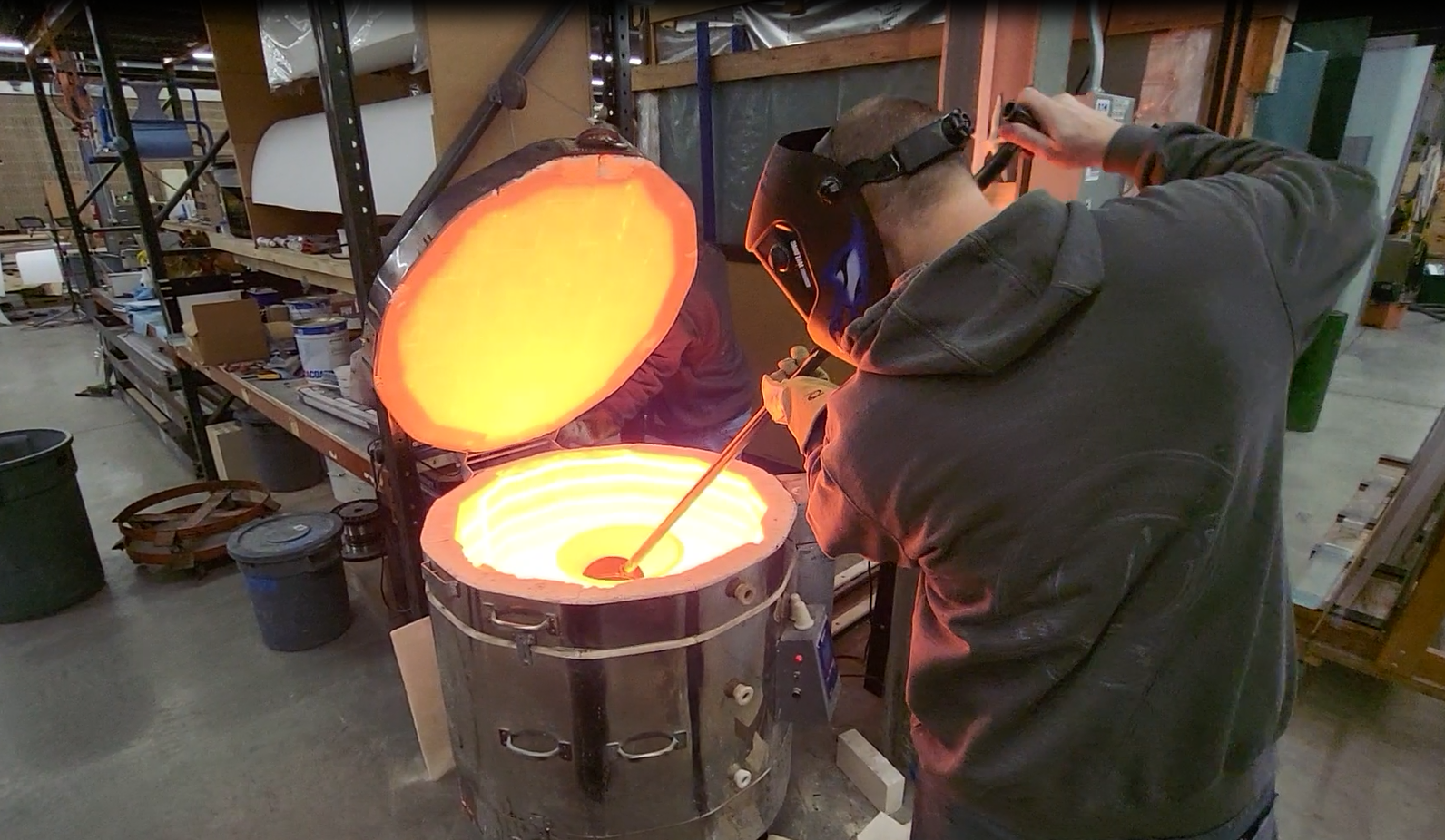
Lucid glazier gathering a sample of molten glass for color testing to match an original glass floor tile.
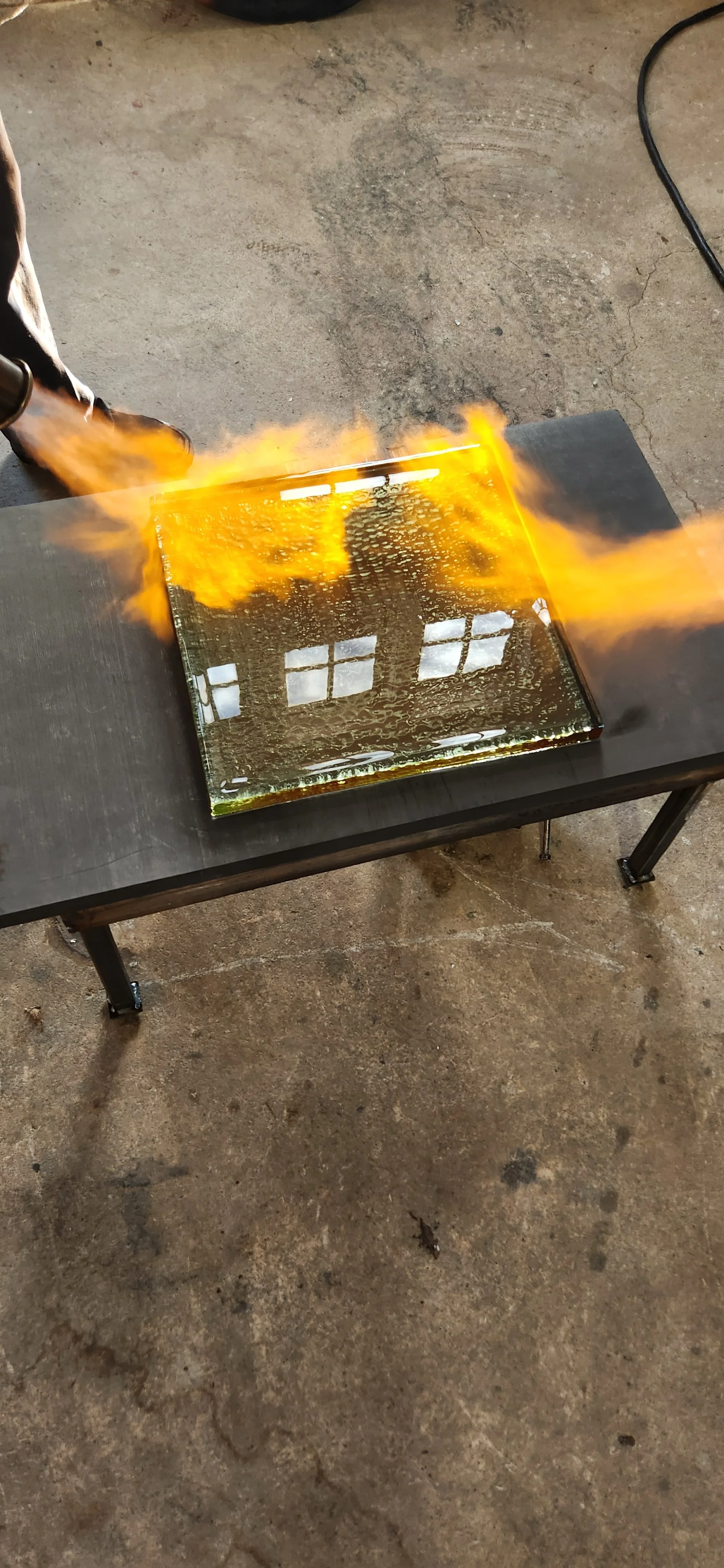
Glaziers using blow torches to control the cooling of a hot poured glass tile.
(Click on photos to enlarge)
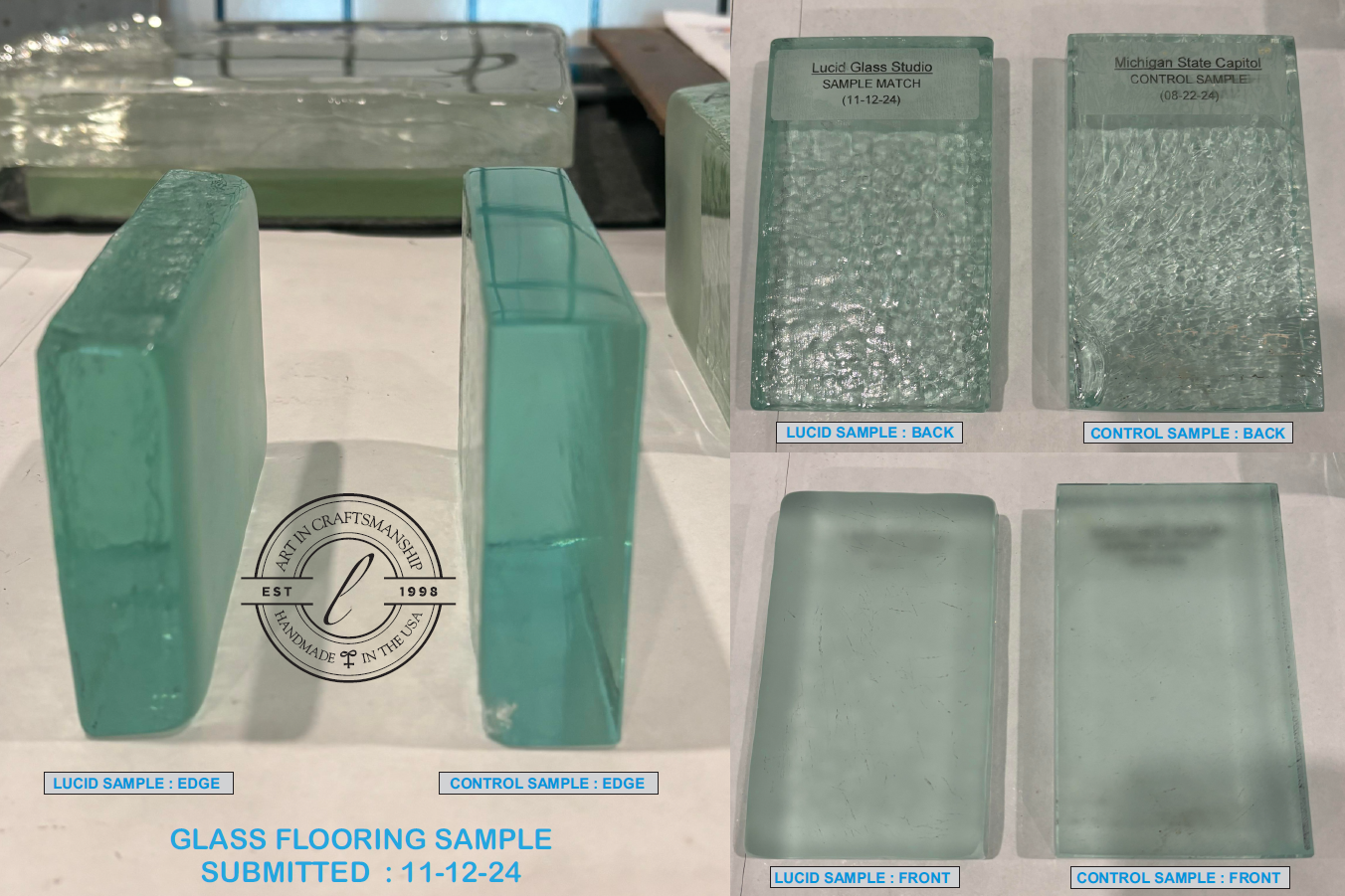
Lucid glass sample tile comparison with an original tile from the Capitol’s glass floor.

The team at Lucid Glass Studio in East Providence, Rhode Island.
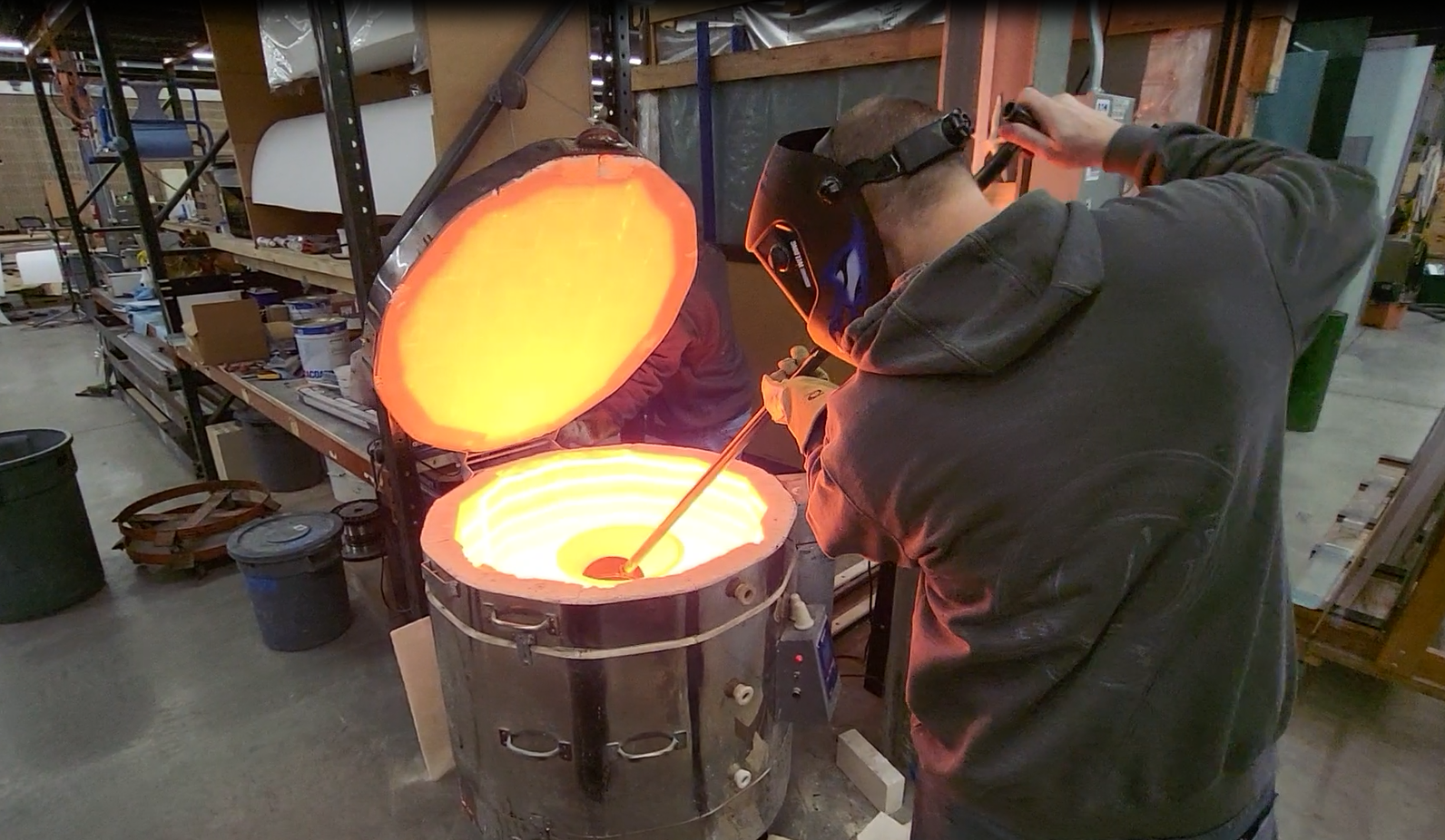
Lucid glazier gathering a sample of molten glass for color testing to match an original glass floor tile.
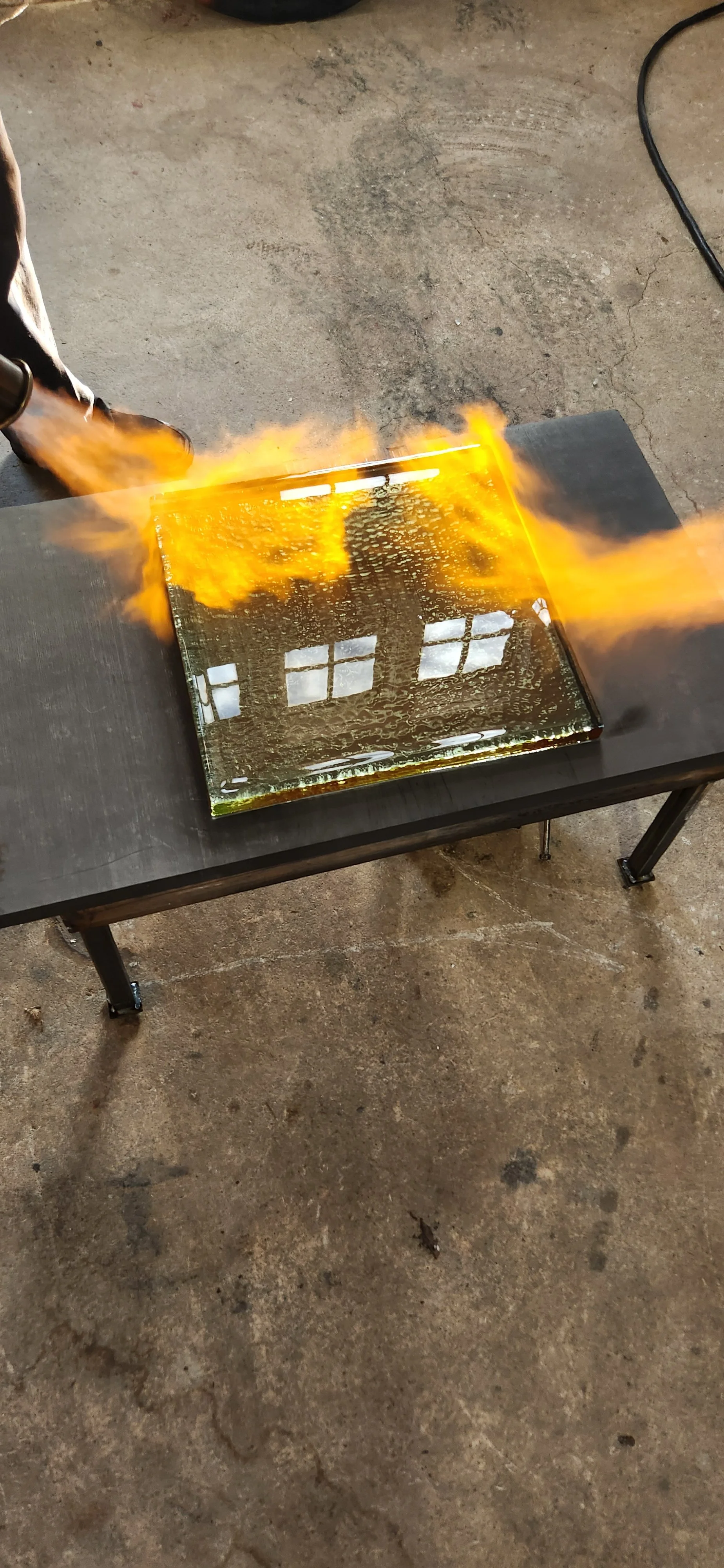
Glaziers using blow torches to control the cooling of a hot poured glass tile.
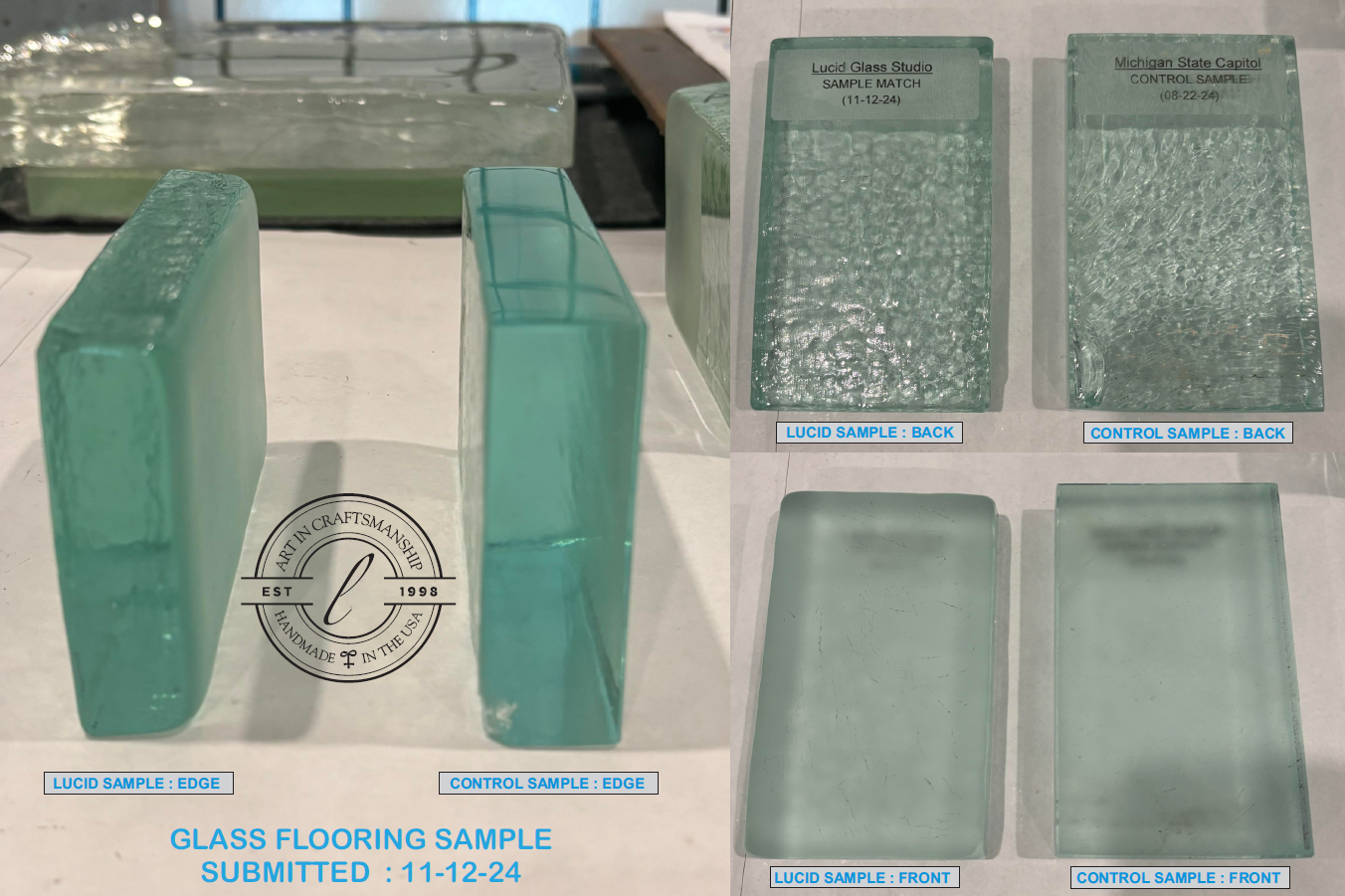
Lucid Glass sample comparison with an original tile (control sample) from the Capitol’s glass floor.

Custom-colored glass is heated to more than 2,400°F and refined to remove impurities before being slowly poured into a mold. The glass is then carefully annealed for 24–30 hours to relieve internal stresses before being cooled to room temperature. Finally, each tile is waterjet-cut to its precise size, sandblasted to match the original tiles, and prepared for shipment from Providence, Rhode Island to Lansing, Michigan.